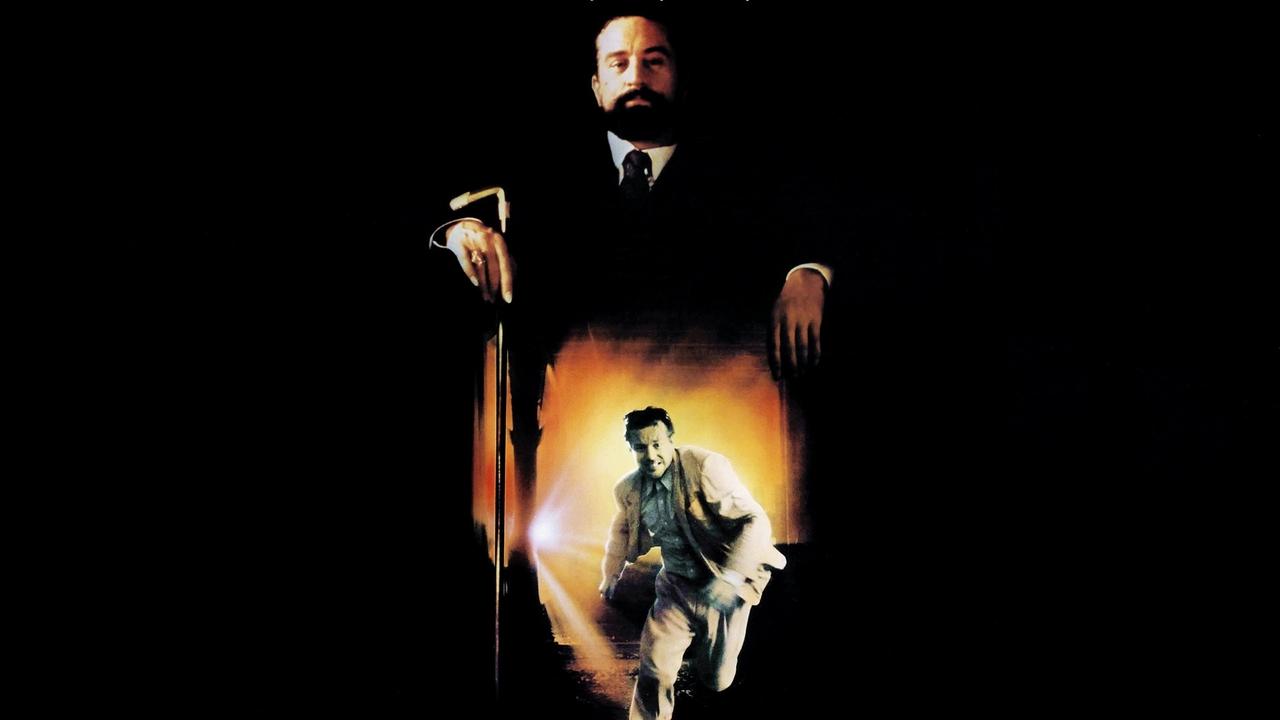

Angel Heart
“It will scare you to your very soul.”
A down-and-out Brooklyn detective is hired to track down a singer on an odyssey that will take him through the desperate streets of Harlem, the smoke-filled jazz clubs of New Orleans, and the swamps of Louisiana and its seedy underworld of voodoo.
About Angel Heart
What makes Angel Heart worth revisiting
Say “private investigator hired to find a vanished crooner” and you expect cigarettes, rain and a smoky desk lamp. Angel Heart leads with all that shorthand — Louis Cyphre hires Harry Angel to find Johnny Favorite — but then quietly shifts the ground beneath the genre. That tilt is the whole point.
Alan Parker directs; the film runs for 113 minutes and keeps you inside that tilt for the duration. It’s a mash-up of neo-noir, mystery and outright satanic horror, with erotic-thriller threads woven through — the sort of film that refuses to be comfortably filed away. Mickey Rourke is the man on the case, and he’s surrounded by a cast of characters who turn a routine disappearance into a story about family, memory and identity. Those are the things that keep people returning to it: questions about who belongs where, and what price was paid to get there.
The idea that sets Angel Heart in motion
The film kicks off with a deceptively simple private-eye brief: find Johnny Favorite. That inquiry unspools into a series of broken trusts — a hospital that’s lied about a transfer, a doctor who admits he was paid to falsify records, and a trail that bends south to New Orleans.
Harry’s investigation isn’t subtle. He leans on people, forces answers out of a former bandmate who directs him back to a wealthy fiancée, and keeps pushing after neighbours start turning up dead. Each new lead tightens the noose and drags the story away from a tidy detective yarn.
Then the setup does the thing smart mysteries sometimes do: it replaces a hunt for a missing person with an examination of what that disappearance covered up. The facts the film reveals — falsified records, a dumped patient, violent retribution — make the job feel like something more dangerous than a retainer and a promise of payment.
And at several of those beats Harry’s reactions are plain and physical: he’s sickened by certain stories, he forces answers and he keeps asking the same urgent question until the meaning becomes unavoidable.
Why Harry Angel matters
Harry Angel exists at the junction between a job and a person. He’s the investigator you follow because he follows the thread — Louis Cyphre brings him in to find Johnny Favorite — but as the case deepens the job starts to ask real things of him.
Family is one of the film’s recurring pressures, and Harry becomes entangled in it whether he wants to or not. People around the missing singer have ties that aren’t easily untangled, and those ties pull Harry into private, violent business he didn’t sign up for.
The investigation also shoves Harry into other people’s danger. He’s physically attacked by enforcers who make clear he’s trespassing on someone else’s protection — a reminder that authority and patriarchy are forces to be reckoned with in this story.
And finally, Harry’s persistence — his willingness to break into the past, break into homes and break whatever quiet remains — is what makes him central. He isn’t merely the audience’s point of view; he’s the mechanism that forces buried things back into daylight.
Angel Heart has more on its mind than the plot suggests
Beneath the missing-person framework the film keeps returning to family — who protects whom, and what lengths people will go to hide or preserve lineage and legacy. That theme colours the violence and the secrets the case uncovers.
Closely linked is the idea of home and safety. Several scenes make the audience aware that houses and hospitals, places we expect to shelter us, are the locations of betrayals and cover-ups. A falsified hospital record is not just a plot detail; it’s a failure of institutions meant to keep people safe.
Authority rides through the story as well. Whether it’s the patriarchal power in Louisiana or the institutional authority of a psychiatric facility, the film asks who gets to decide what’s true and who gets to decide who is protected. Memory and identity complete the set: there are people whose pasts have been altered, lives built on other lives, and a specific plan to assume another man’s identity. Those threads turn the detective story into a reckoning about what a person becomes when memory is taken from them.
Angel Heart could not belong to any other decade
Released in 1987, Angel Heart sits comfortably in a period when Hollywood was willing to mix mainstream genre filmmaking with darker, more transgressive elements. In that sense it feels of its moment: a commercial picture that isn’t afraid to get uncomfortable.
The film’s blend — a neo-noir detective plot braided with fantasy and satanic horror and erotic thriller beats — reflects a late-80s appetite for cross-genre experiments. That willingness to take a familiar form and push it into stranger territory is part of why the film feels distinctly of its era.
Put simply: it’s a product of a time when studio pictures could still gamble on a high-concept premise with genuinely disturbing consequences. The decade allowed the film’s strange and uneasy tonal mix to reach audiences rather than be tucked away as an art-house curiosity.
What has aged — and what hasn't
Some of the film’s core matters — family and the idea of home as something that can be violated — remain uncomfortably effective. Those themes are material and immediate, and they don’t come with built-in nostalgia: they ask uncomfortable questions about protection and inheritance.
Certain plot beats also still land hard. The discovery that a supposedly safe institution falsified records, and the revelations that follow, keep the story propelled. Moments in which Harry physically breaks into places and uncovers evidence still function as proper mystery-thriller payoffs.
Other images and shocks in the story are there to unsettle, and they continue to do their job; the film doesn’t offer tidy comfort. Finding a murdered Margaret with her heart removed and then later discovering the vase with a dog tag stamped Angel, Harold are the kinds of discoveries that make the broader revelations feel earned rather than cheap tricks.
In short: the structural bones that marry personal dread to detective duties haven’t weakened. The story still pulls you through because the stakes remain recognisably human — family, identity and what people will do to keep or break both.
Why Angel Heart still matters
People who grew up with this film often remember particular shocks as much as scenes. The murders that ripple out from Harry’s enquiries — a former bandmate found killed and a wealthy fiancée discovered with her heart removed — are not easily forgotten.
Then there’s the larger conceit that hooks a lot of the film’s afterlife: the case isn’t merely about a vanished star. The investigation slowly exposes a plan involving identity, stolen lives and a bargain that reaches beyond music and money. Those revelations make the payoff bitter rather than cathartic.
Louis Cyphre’s arrival — a client whose name hints at something infernal — reframes the whole story. When the truth about identity and ownership comes home, the film’s nastier elements feel like an extension of the moral accounting the plot has been building towards. And finally, the ending details that leave viewers unsettled — a murdered lover, a child who is evidence of something darker, and the realisation that the detective has been uncovering parts of his own life — are the kinds of late-film blows that keep the picture in people’s heads long after the credits roll.
Does Angel Heart still hold up?
Yes — but not for every viewer. If you want a tidy detective story, this is not the place. Angel Heart is a film that starts as a missing-person case and deliberately becomes much darker, asking questions about family, the fallibility of institutions and the costs of stolen identity.
There’s pleasure here for the patient viewer: a compact 113-minute narrative that layers mystery onto queries about memory and belonging. Mickey Rourke’s Harry Angel is the thread you follow into the mess, and the revelation at Margaret’s house — the vase and the dog tag stamped Angel, Harold — turns the investigation inward in a way that still hits.
What might trouble modern viewers are the film’s willingness to use shock and to push erotic and violent beats together in ways that don’t smooth into comfort. That disquiet is part of the film’s design: it wants you unsettled by what family and protection can be twisted into.
So should you watch it? If you’re curious about a movie that mixes noir, occult fantasy and a real appetite for moral darkness, yes. Angel Heart holds up as a daring genre mash-up that still makes the case personal — and that final descent, literal and figurative, is exactly the kind of conclusion that lingers.