An American Werewolf in London
“Beware the moon.”
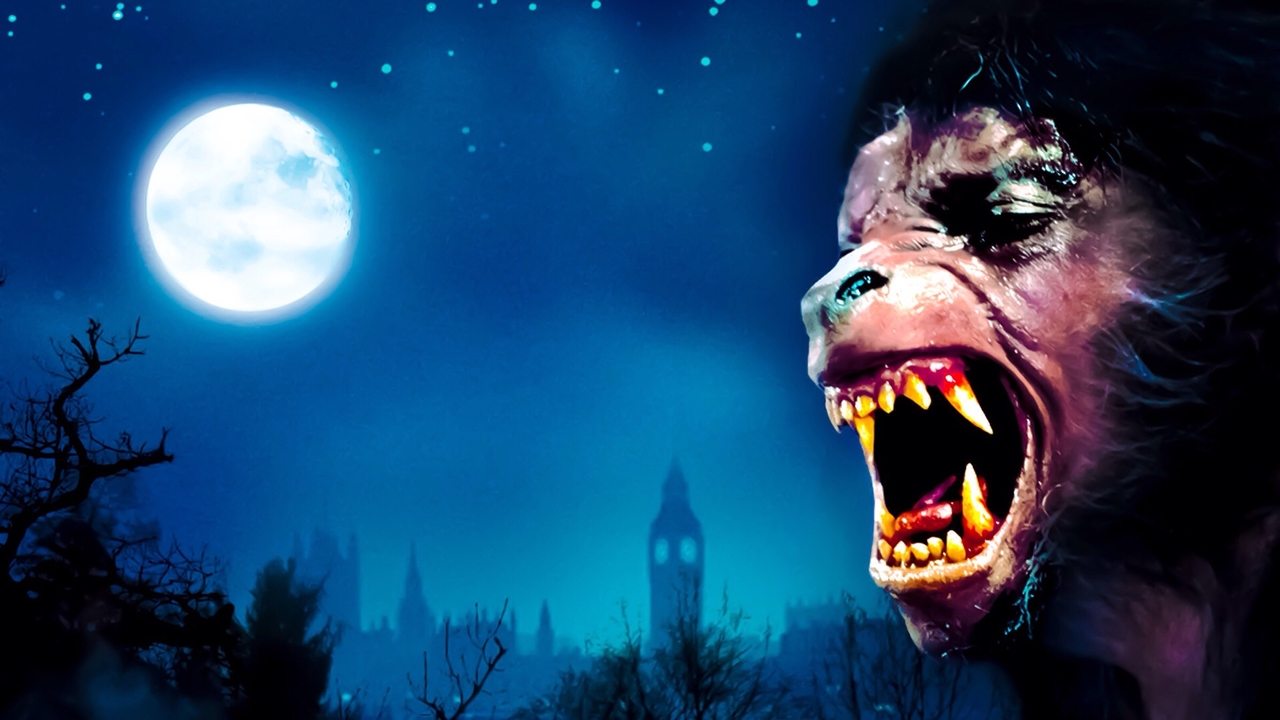
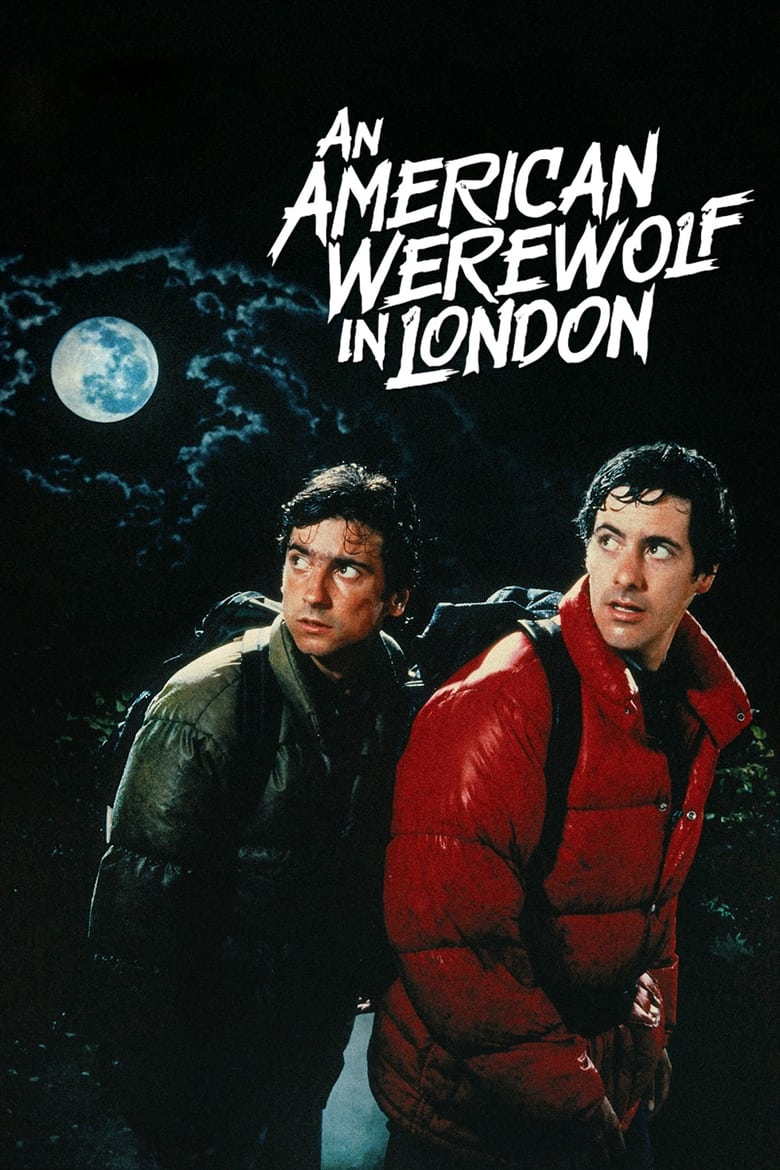
American tourists David and Jack are savagely attacked by an unidentified animal while hiking on the Yorkshire Moors. After retiring to the home of a beautiful nurse to recuperate, David soon begins experiencing disturbing changes to his body and mind.
About An American Werewolf in London
Why An American Werewolf in London is still worth talking about
Start with two sensible-sounding Americans on a student trek over the North York Moors. That simple setup — David Kessler and Jack Goodman walking into a place that clearly wants them to leave — gives the film an immediate, everyday ground to hang the strange on. It’s where the story’s jokes and its jolts both feel earned.
From the pub warning to the attack, the film moves fast. David wakes three weeks later in a London hospital and the ordinary world begins to tilt: local authorities shrug, old superstitions are treated like embarrassments, and the one friend who should be gone keeps coming back to tell him the truth in increasingly grim ways. John Landis keeps this taut — 97 minutes of comedy-horror that never lingers for the sake of atmosphere. It’s a tight ride: pub banter, nightmares, the difficulty of convincing anyone you’re not simply mad, and then the night David is told he has no choice but to reckon with what he’s become.
Why David Kessler matters
David Kessler begins as one half of a sensible-sounding pair of American graduate students on a moorland walk. That ordinariness matters: the movie needs someone credible to be chewed up by extraordinary events, and David supplies a recognisable human anchor.
He’s not a hero in a costume. He’s a man who survives a brutal attack and then has to live with the knowledge that survival brought something worse. His choices become the film’s moral engine — not grand gestures, but small, terrifying reckonings about what to do when you discover you can hurt people without meaning to.
There’s a persistent, private dignity to David’s struggle. He tries the obvious, practical thing — to turn himself in, to stop the harm — and repeatedly finds himself unable to follow through in the moment it matters. Those failed attempts are as revealing as any dramatic speech.
The movie’s quieter, crueller moments hinge on that human flicker: the man who calls his family to say he loves them and then can’t bring himself to end his life. It’s a small scene on paper; in practice it keeps the character stubbornly, painfully real.
An American Werewolf in London has more on its mind than the plot suggests
On the surface the film is about a bite and a transformation; underneath it keeps returning to mortality. The werewolf plot compacts the central question: what does it mean to be alive when the thing inside you is killing you?
Fear in this film isn’t only about jump scares. It’s fear as erosion — of trust, of control, of the sense that your life belongs to you. The moments where David tries and fails to stop himself are less horror beat, more existential collapse.
There’s also a sly conversation about belief. Local superstition, dismissive authorities and the stubborn return of Jack in an undead form create a tug-of-war between scepticism and the impossible. People who should notice refuse to; those who speak the old language are both warning and outcast.
Authority, in other words, is shown as imperfect. Institutions and officials offer explanations that fit tidy categories — lunatics, escaped criminals — while the messier, supernatural truth hangs around the edges, stubborn and cruel.
An American Werewolf in London could not belong to any other decade
Released in 1981, the film sits at the very start of the decade and carries that early-80s appetite for mixing tones — it’s comfortable being funny one moment and deadly serious the next. That restless blend feels of its time: a willingness to pair dark material with a wink.
At 97 minutes, the movie doesn’t overstay its welcome. Its compact running time helps it keep pace with contemporary genre films that preferred momentum over indulgence, and that economy is very much of the period.
Calling it ‘the 80s’ as shorthand would be lazy, but the film’s willingness to shift registers — horror, black comedy, ghost story — sits naturally in an era where genre boundaries were actively being nudged and rearranged. Put simply: an early-80s release like this one wears its contradictions openly, which is part of why it still feels unmistakeably of that moment rather than a neat pastiche of it.
What has aged — and what hasn't
Fear is a straightforward, durable ingredient here. The film treats terror as an everyday intrusion into a life that was previously ordinary, and that basic emotional economy still lands. People still squirm at the same moments because the stakes are human, not just spectacular.
The moral stubbornness of the protagonist has also kept up. The scene where David phones his family to say he loves them and then can’t bring himself to follow through on suicide remains a hard, quiet moment. It’s not flashy, but it’s the kind of human hesitation that modern viewers recognise.
The film’s tonal swings can still surprise. Some viewers might find the shifts between comedy and horror abrupt; others will see them as part of its personality. Either way, those choices are intentional and still provoke a reaction.
What hasn’t dated is the central tension: a character trying to contain something uncontrollable. That setup is simple, and simple things often survive time better than fashion.
Why An American Werewolf in London still matters
There’s a sequence of moments that stick: two students on a walk, a pub that tells them to keep to the road, the sudden night attack that leaves one friend dead and the other changed. Those beats are tidy and memorable — the sort of scene-setters that people can repeat and recognise years later.
The film also refuses to let Jack’s death be tidy. He returns to walk the world in a degraded, undead state and keeps telling David what the truth is; his presence turns the horror into an ongoing moral problem rather than a one-off fright.
David’s attempts to stop himself — staying with the nurse who cared for him, trying to turn himself in, the call home that ends in failure — keep the story anchored in consequences. That focus on the cost of being alive as a monster is why viewers who grew up with the movie still find it unsettling.
Finally, the film’s ability to weave pub-knife conversations, hospital bedside moments and midnight panics into the same emotional thread is why it remains talkable: it’s not just about monstrous imagery, but about the human confusion that follows an impossible wound.
Does An American Werewolf in London still hold up?
Yes — but not for the reasons you might expect. This isn’t a nostalgia exercise; it’s a compact, 97-minute film from 1981 that keeps returning to mortality, fear and the friction between sceptical authority and stubborn superstition. Those concerns feel immediate still because they are human concerns.
If you’re watching for the plot, you’ll find it direct: two students walking on the moors, a warning ignored, an attack that ends one life and changes another. But the movie’s power is in the follow-through — the undead friend who won’t stop, the hospital realities, the attempts to do the right thing when the right thing is no longer clear.
It’s also a film that trusts small beats: David staying with the nurse who tended him, the private call to his family, the repeated attempts to surrender. Those choices make the horror feel inevitable and tragic rather than merely sensational. So should you watch it now? If you want a werewolf film that keeps asking what it costs a man to be human — and then refuses to soften the answer — give it the hour and a half. It’s sharp, a little cruel and, crucially, still able to make you feel the question when the lights go down.