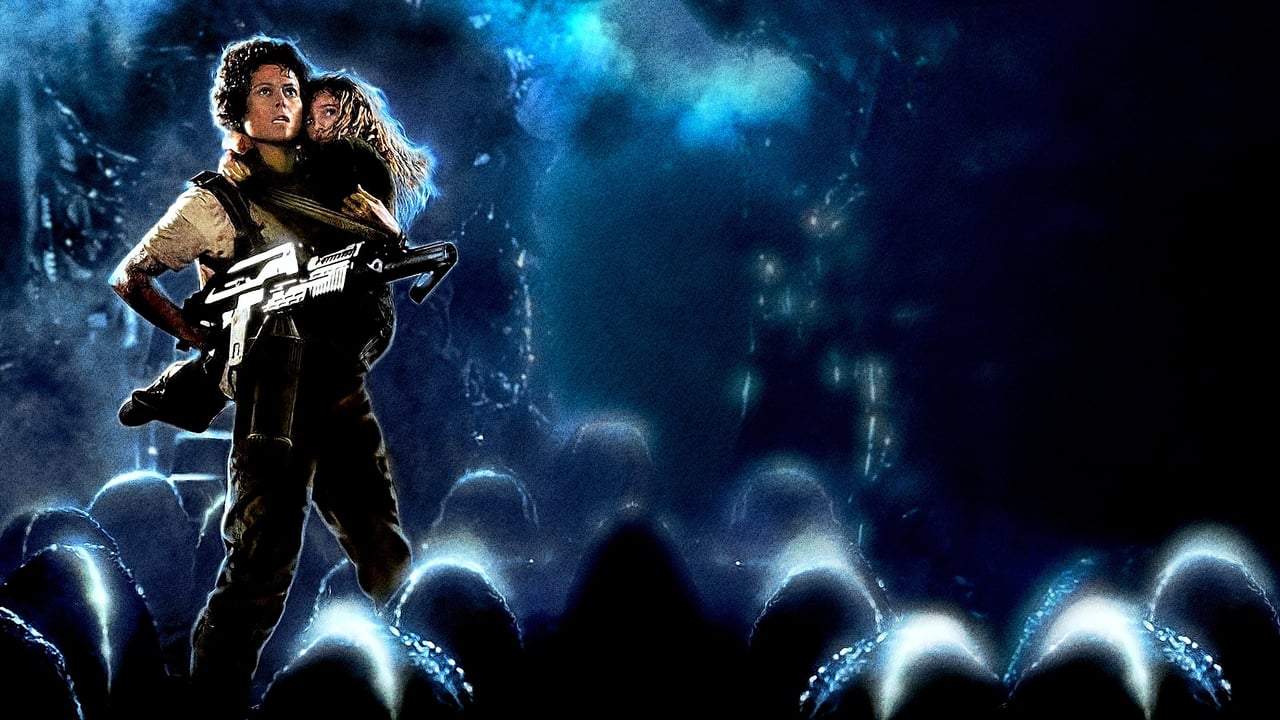
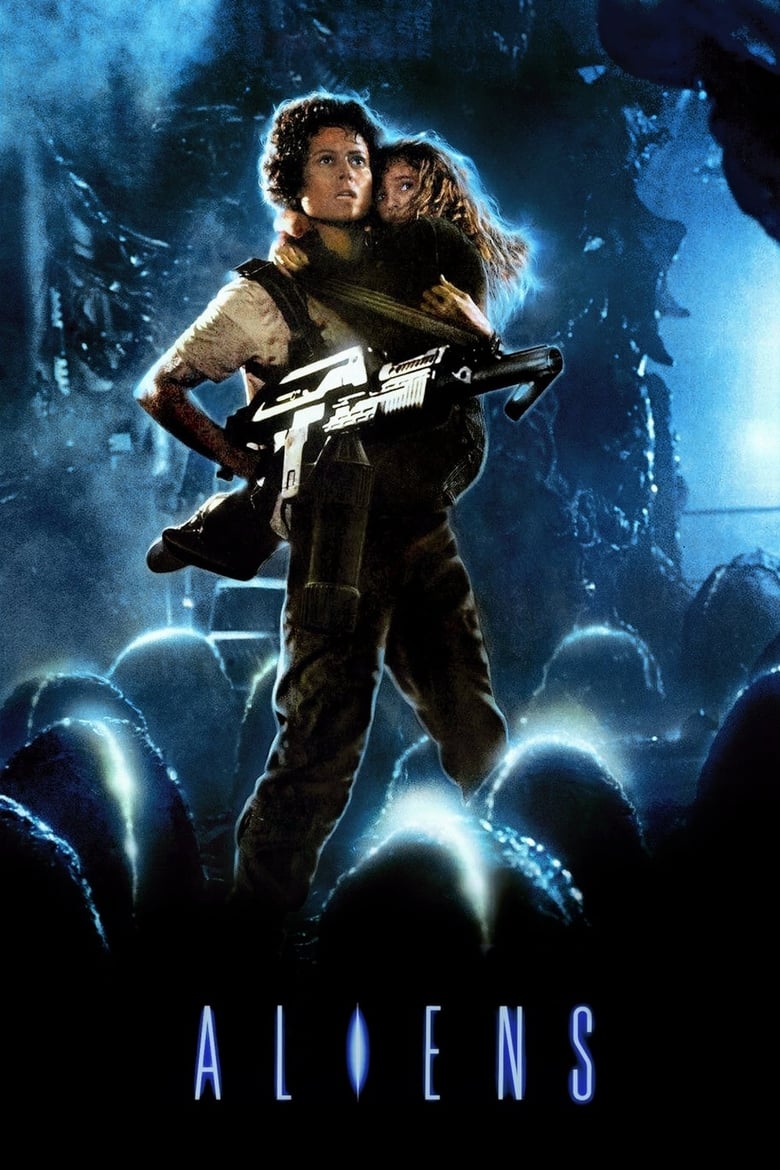
Aliens
“This time it's war.”
Ripley, the sole survivor of the Nostromo's deadly encounter with the monstrous Alien, returns to Earth after drifting through space in hypersleep for 57 years. Although her story is initially met with skepticism, she agrees to accompany a team of Colonial Marines back to LV-426.
About Aliens
What makes Aliens worth revisiting
Aliens opens on a simple, disorientating fact: Ellen Ripley has been asleep for decades, discovered in an escape shuttle after a mission where her actions destroyed a ship to stop a lethal creature. That jolting reset — a survivor returned to a different future — gives the whole film its moral and emotional engine.
This is a James Cameron picture through and through: released in 1986 and running to about two hours and a quarter, it doesn’t sneak up on you. It sets up a blend of pure genre pleasures — action and horror squeezed together — and then leans into them with the assurance of a director who knows exactly how much momentum to maintain. And it’s populated with a cast who hand you the necessary touchstones: William Hope as the inexperienced Lieutenant Scott Gorman is one of the figures whose failure opens space for Ripley to take charge, while Sigourney Weaver’s Ripley sits at the film’s centre, dragging the story from haunted survivor to active rescuer.
The idea that sets Aliens in motion
It begins with a straightforward mission hook: contact is lost with a terraforming colony on LV‑426, and the company sends representatives to find out what went wrong. That call pulls Ripley back into the orbit of the threat she once thought she’d finished with.
Weyland‑Yutani’s representative Carter Burke and the Colonial Marine lieutenant Scott Gorman ask Ripley to come along. She is still visibly shaken by her previous encounter and only agrees if the plan is to eradicate whatever they find, not to study it.
Onboard the Sulaco she meets the marines — a group trained for war, but not necessarily for this. There’s also an android, Bishop, whose presence raises old scars: Ripley remembers how a previous android, Ash, turned on its crew to protect the alien on company orders, and she doesn’t trust another one easily.
That distrust matters because the squad’s first close call proves worse than anyone predicted: after a newborn alien bursts out of a colonist, its scream draws the adults, and the marines find themselves ambushed and outgunned in a place that was supposed to be under control.
Aliens has more on its mind than the plot suggests
On the surface it’s a monster movie and a firefight; under that, the film keeps snagging on corporate appetite. The idea that a company might value a dangerous specimen over human life is threaded through the story, and it’s given bite when Ripley tries to expose those motives but is repeatedly thwarted.
Parental protection is the other engine. Ripley’s transition from survivor to reluctant guardian turns the plot into a rescue narrative with teeth: she’s not battling abstract menace, she’s saving a child, and that personal stake hardens every choice she makes.
Heroism and courage in Aliens aren’t always loud. Sometimes they’re the opposite: steady, stubborn refusal to accept defeat. Ripley’s willingness to take command when others lose their nerve reframes the film’s firefights as moral tests, not just action set‑pieces.
Fear and power play through the movie’s physical spaces too — moving from corridors splattered with alien secretions to the sudden moments when the lights cut and the ceiling becomes a threat. Those flips from control to chaos underline the themes about how fragile safety really is.
Aliens could not belong to any other decade
Released in 1986, Aliens sits squarely in the middle of the 1980s film landscape — a moment when big‑scale genre mixing felt fresh and commercially viable. It wears that decade’s appetite for spectacle without ever losing the tightness of its core story.
Part of what anchors it to the era is the way it moves between genres: action, horror, science fiction and even elements of war film sit side by side. That blend feels very of its moment, a confident cinematic stew that says the audience can handle multiple tones in one go.
James Cameron’s direction is another 1980s trademark: ambitious, showy when it needs to be, and stubbornly focused on delivering visceral, immediate scenes. The film’s momentum and scale are both of a piece with mid‑80s Hollywood’s taste for high‑concept entertainments. But it isn’t nostalgia for nostalgia’s sake. The film’s choices — who to protect, who to trust, what to blow up — are readable as products of their decade because they marry personal stakes to spectacle in a way that felt new then and still feels alive now.
Why Aliens still matters
There are sequences that stick in the memory because they replace simple shock with moral consequence: Ripley waking from decades in stasis; the debrief where she’s not believed; the moment she sees live facehuggers in containment and the stakes snap into focus. Those beats give the film a backbone of plain, hard emotion.
The cast of marines gives the story texture — a squad that goes from professional swagger to the reality of being outmatched. Ripley stepping into command when Gorman panics is more than a plot pivot; it’s the moment the movie announces whose story it will be.
Then there’s the corporate betrayal: Ripley discovering that Burke had turned colonists into a means to an end — investigating a derelict for profit — hardens the narrative’s moral edge. It converts body horror into an indictment of human greed, making the alien menace feel like part of a larger social problem.
Finally, the confrontations are memorable because they keep the stakes intimate even at enormous scale. From the discovery of cocooned colonists to the encounter with the queen and Ripley’s last stand in an exosuit, the film keeps personal rescue at its core — and that’s what people remember when they talk about it.
Does Aliens still hold up?
Yes. If you want a film that pairs pure set‑piece momentum with a clear moral centre, Aliens still delivers. It asks straightforward questions — who do we trust, who do we protect, what do we sacrifice for survival — and it answers them with clarity and force.
The film’s drama often comes from practical pressures on the story: Ripley is still traumatised but agrees to go back only to exterminate the threat; when systems fail — the power cuts, the dropship crashes — those failures force human decisions into the foreground and reveal character under pressure.
It also holds up because the stakes remain recognisable: corporate calculation (the attempt to profit from the alien) clashes with Ripley’s refusal to abandon a child, and the contrast keeps the emotional throughline sharp. When Gorman panics and others fall back, Ripley steps forward — and that shape still feels urgent.
So yes, watch it. You’ll come for the monsters and the firefights, and you’ll stay for the bit that really matters: a survivor who won’t walk away from another human being. That combination of spectacle and stubborn humanity is why Aliens still gets the pulse racing.