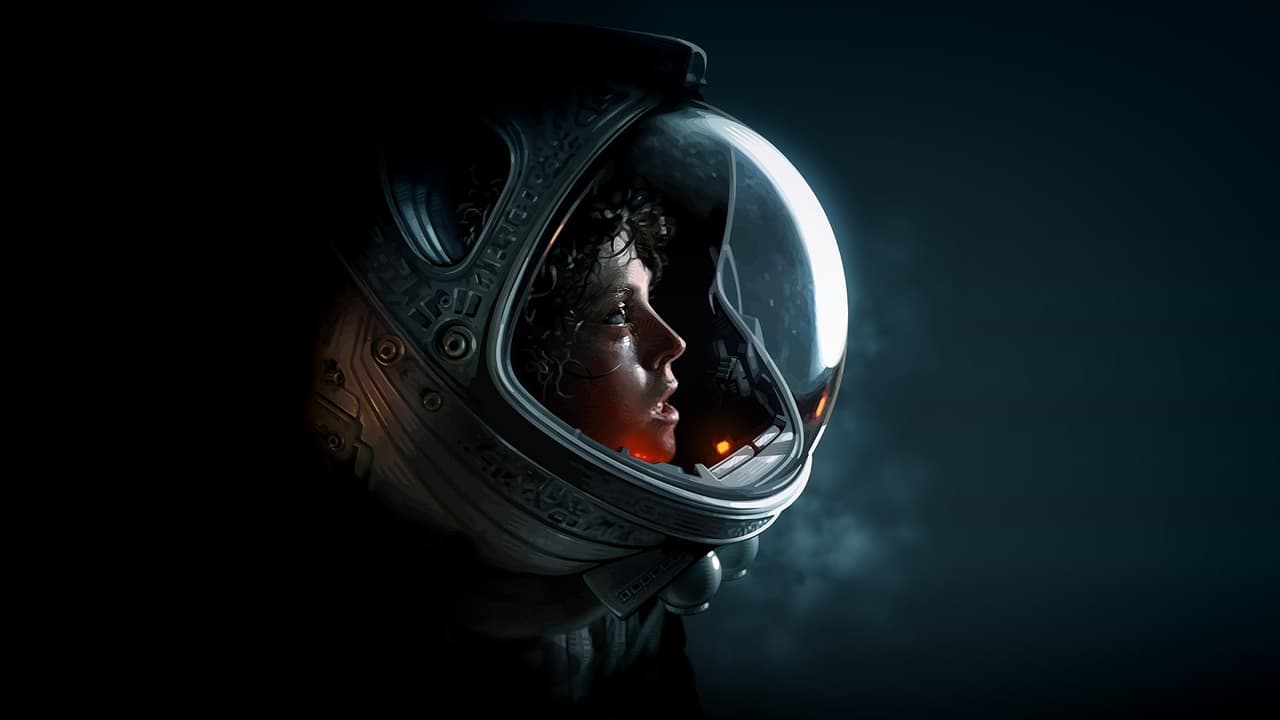
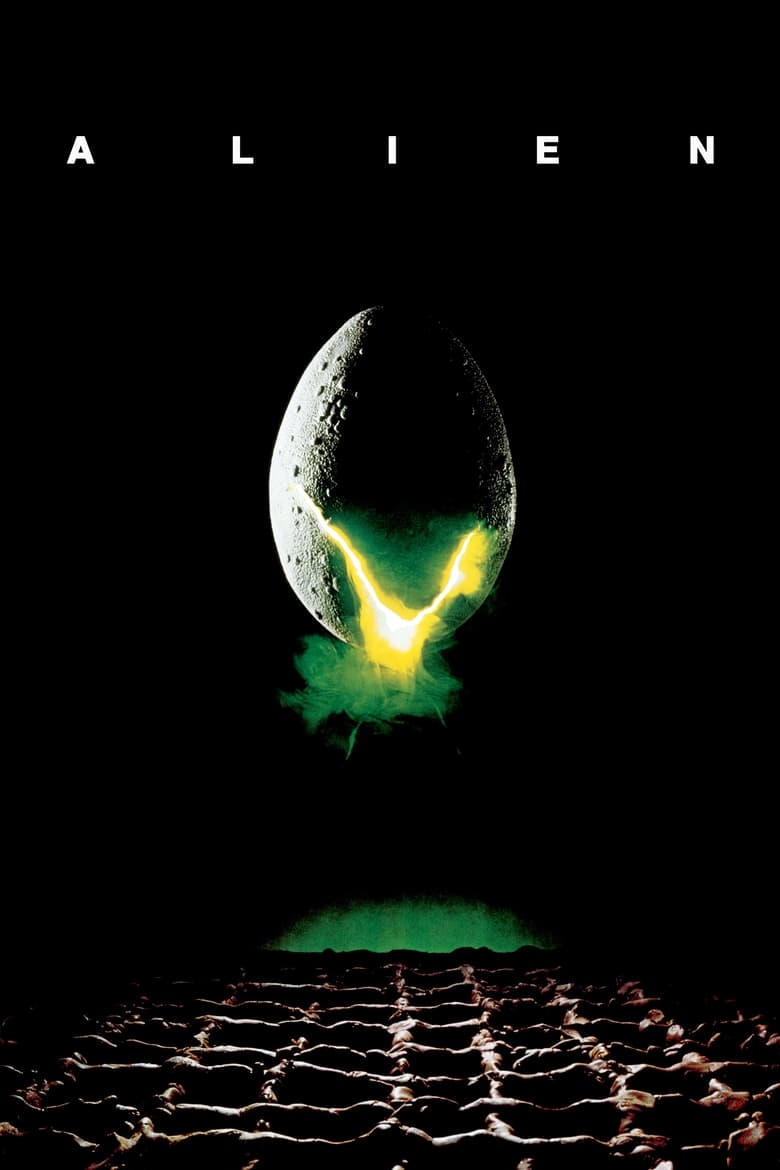
Alien
“In space no one can hear you scream.”
During its return to the earth, commercial spaceship Nostromo intercepts a distress signal from a distant planet. When a three-member team of the crew discovers a chamber containing thousands of eggs on the planet, a creature inside one of the eggs attacks an explorer. The entire crew is unaware of the impending nightmare set to descend upon them when the alien parasite planted inside its unfortunate host is birthed.
About Alien
What makes Alien worth revisiting
Start with the set-up everyone remembers: the commercial space tug Nostromo is lumbering home, its seven crew tucked into stasis — a captain, an executive officer, a warrant officer, a navigator, a science officer, two engineers and, yes, a ship’s cat. That small, specific ordering of people gives the film its heartbeat.
Then add Ridley Scott’s steady hand. The director doesn’t waste the first hour on fireworks; he’s quietly making the ship feel like a place you understand — a workplace with its own rhythms — and that’s what makes the later shock moments land so hard. And finally, the film’s identity: Alien is simultaneously science fiction and horror, a thriller that prefers slow pressure over instant spectacle. At 117 minutes, it takes its time. Which means it takes yours.
The idea that sets Alien in motion
The engine of Alien is deceptively simple: the crew investigate a transmission, they bring something back aboard, and whatever that thing is proves better at surviving than they are. The film keeps the mechanics clear — you always know what the crew are trying to do — which lets fear move in without confusing the rules.
The turning point comes when Kane, who was thought well after an earlier incident, suddenly convulses at a communal meal and a small creature bursts from him. The image is brutal and specific; it converts a safe, domestic moment into a new kind of danger.
From there the crew adopt sensible countermeasures — tracking devices, a search through the ship — but the ship itself becomes a hunting ground. Even a house pet can lure someone into a fatal corner: following Jones into a landing leg compartment, Brett meets the creature and doesn’t come back.
And the story closes the loop in a tidy, grim way: Ripley records the aftermath and places herself and Jones into stasis to begin the return trip home. The film is built around a tight set of actions, which is why the suspense never feels scattershot.
Why Dennis Monroe Parker matters
Yaphet Kotto’s Dennis Monroe Parker is one half of the Nostromo’s engine room: an engineer who, on paper, exists to keep the tug running. The film never turns him into a cartoon hero or a bit-part wisecracker; he’s part of the crew’s everyday competence.
That ordinariness is the point. Alien treats its characters as a family of workers rather than archetypes. Parker is valuable because he helps sell the idea that this is a functioning, believable little society — which makes disruptions feel personal, not abstract.
The ship itself — and its inscrutable computer Mother — pull the crew into decisions that aren’t always theirs to make. Mother wakes them, deciphers transmissions and withholds answers when asked; that pressure from above reshapes what the crew can do, and Parker is one of the people forced to live with those constraints.
When Ripley accesses Mother and the company’s secret instructions are revealed, it’s a reminder that the danger isn’t solely the thing in the vents: it’s also the system that values cargo over crew. Parker’s presence anchors those stakes because he represents the practical, day-to-day reality of anyone aboard the Nostromo.
Alien has more on its mind than the plot suggests
On the surface Alien is a monster movie. Underneath, it’s a film about who counts as family, who gets protection and who gets sacrificed. The crew are a working family; that closeness makes every loss hurt in a way a roster of anonymous victims would not.
Freedom is another quietly insistent note. The crew are travelling home but are awoken and diverted by orders that aren’t theirs. The film stages a tension between individual survival and the obligations — or constraints — of a larger system.
Fear in Alien is practical and immediate. It doesn’t come from abstract cosmic horror so much as from the claustrophobic certainty that there’s nowhere to run and the rules that should keep people safe can be bent or broken. Finally, mortality and lifespan creep through everything. The film keeps asking how long a person or a crew can hold on when resources, information and even loyalty are unreliable. That’s what makes the monster disturbing: it’s not just a threat to life, it’s a threat to the fragile arrangements that let people survive together.
Alien could not belong to any other decade
Alien arrived in 1979, right at the tail end of the 1970s. That position matters: it’s a film that wears its decade quietly, in its patience and its willingness to mix genres.
Saying it’s a 1970s movie isn’t a costume note. It’s a reminder that this was a time when filmmakers often let ideas breathe — a slow burn of mood and suspicion rather than instant answers.
Because it sits in that moment, Alien can feel like a bridge: it keeps a 70s temperament of distrust and methodical suspense while pointing toward the more kinetic science-fiction films that followed.
What has aged — and what hasn't
What still works: the film’s emotional logic. The family quality of the crew and the straightforward human stakes — someone you know is missing, someone you trust is lying — are timeless. That intimacy keeps the fear immediate for modern viewers.
Fear itself ages well here because it’s procedural rather than purely sensational. The film makes you worry about the next sensible step: a search, a trap, a decision about who gets space in the shuttle. Those are the kinds of worries any audience understands.
What’s less defensible to nostalgia is the temptation to protect the movie from criticism by pointing to its age. Better to note what the film asks of you as a viewer now: patience, attention and a willingness to let atmosphere do heavy lifting.
Seen today, Alien feels less like an effects showcase and more like a tight piece of writing about people under pressure. The central interplay of fear and family is what keeps it speaking to us.
Why Alien still matters
People remember Alien because it gives them moments they can’t unknow: a derelict ship that contains a fossilised corpse, an exploratory decision that turns into a quarantine nightmare, and the chestbursting moment that rewrites a meal scene into body horror. Those are narrative moves that lodge in the memory.
The ship’s computer Mother and the revelation of a company directive add a second layer: the threat isn’t just biological, it’s structural. When Ripley discovers that someone ordered the alien brought back regardless of crew safety, the stakes shift from survival to betrayal.
There are also clean, terrifying beats — the crew trying to track the creature across the Nostromo, a plan to force it out through an airlock, and the way the ship itself becomes a trap. Individual losses, like Brett following Jones into a compartment that becomes a killing space, feel sharply earned because the film has grounded us in this working family. Finally, the ending keeps things tightly closed: Ripley finds the alien aboard the escape shuttle and takes decisive, physical measures to get rid of it, then records what happened and enters stasis with Jones to return home. That neat recording-plus-stasis moment leaves the story where it began: with a log and a ship on course.
Does Alien still hold up?
Short answer: yes. Alien from 1979, directed by Ridley Scott and running 117 minutes, still rewards a watch because it’s not built on gimmicks; it’s built on pressure. The film stages a handful of human decisions inside a closed environment and lets fear do the rest.
If you care about characters as a functional unit — a ship’s crew that behaves like a family — Alien pays that off. The losses of Parker and Lambert are felt because the movie took the time to make us recognise the people who died. And the revelation about the company directive turns an already risky situation into a moral squeeze.
It’s also the kind of movie that still surprises: it keeps you guessing about how to solve the problem rather than offering a parade of solutions. Horror and science fiction meet here in service of tension, not spectacle, and that makes the film durable.
So yes, watch it. Put the kettle on, sit through the cautious first hour and let the Nostromo do its work: once it has you inside, Alien will remind you that the scariest things are the ones that happen inside a place you thought you understood.