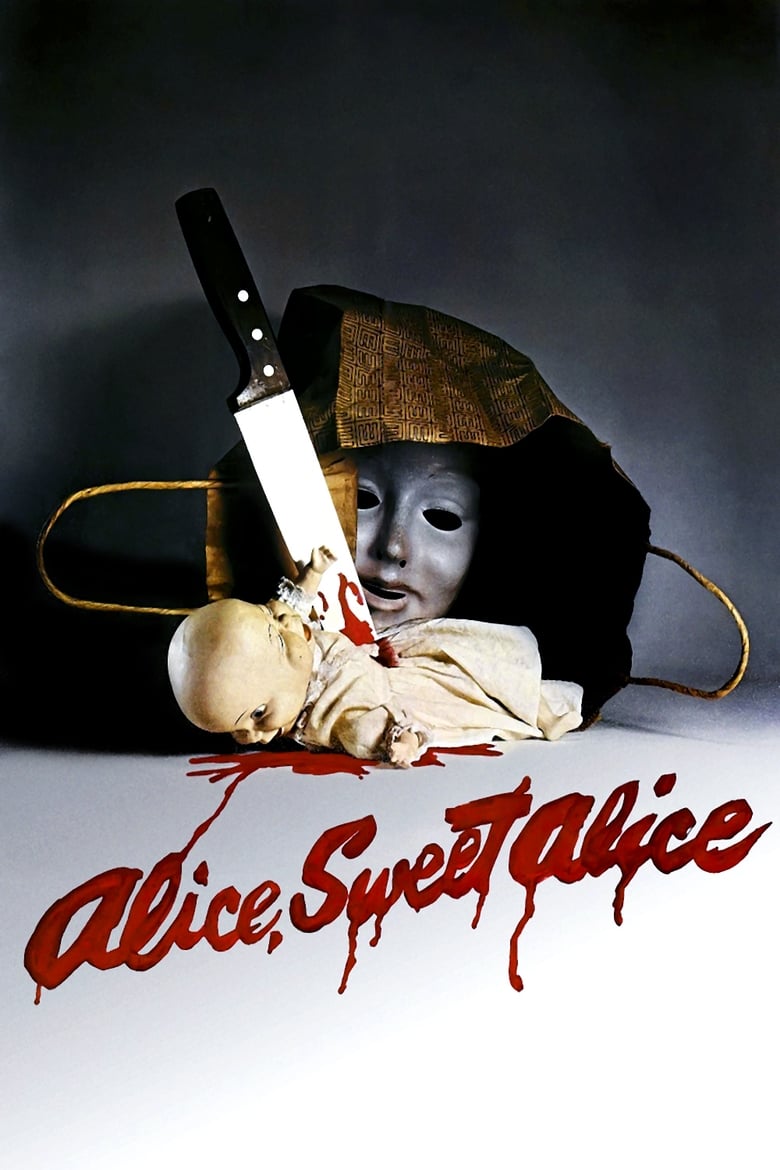
Alice, Sweet Alice
“If you survive this night... nothing will scare you again.”
Alice is a withdrawn 12-year-old who lives with her mother and her younger sister, Karen, who gets most of the attention from her mother, leaving Alice out of the spotlight. When Karen is found brutally murdered in a church, suspicions start to turn toward Alice. But could a 12-year-old girl really be capable of such savagery?
About Alice, Sweet Alice
Why Alice, Sweet Alice still stands out
There’s an image at the heart of Alice, Sweet Alice that you don’t forget: a First Communion interrupted by a discovery so awful it makes the whole ceremony feel like a bad omen. That moment — rooted in a domestic scene of a divorced mother and her two daughters at St. Michael’s Parish in Paterson, New Jersey — gives the film its peculiar charge.
Alfred Sole directs a compact, 98‑minute piece of horror that refuses to be neat. It’s formally a horror-slash-mystery-thriller with detective elements, but what people actually remember is how the story drags family life and religious ritual into the same uneasy space. The cast leans on small, specific parts: Linda Miller as Catherine Spages, Paula Sheppard as Alice and a young Brooke Shields as Karen. Together they populate a world where jealousy, superstition and suspicion collide, and where the ordinary gestures of family life suddenly feel fragile and dangerous.
The idea that sets Alice, Sweet Alice in motion
The engine is simple and cruel: after Karen’s funeral the family is splintered and everyone starts looking for someone to blame. Detective Spina runs the official inquiry, but Catherine’s ex‑husband Dominick conducts his own, obsessive search.
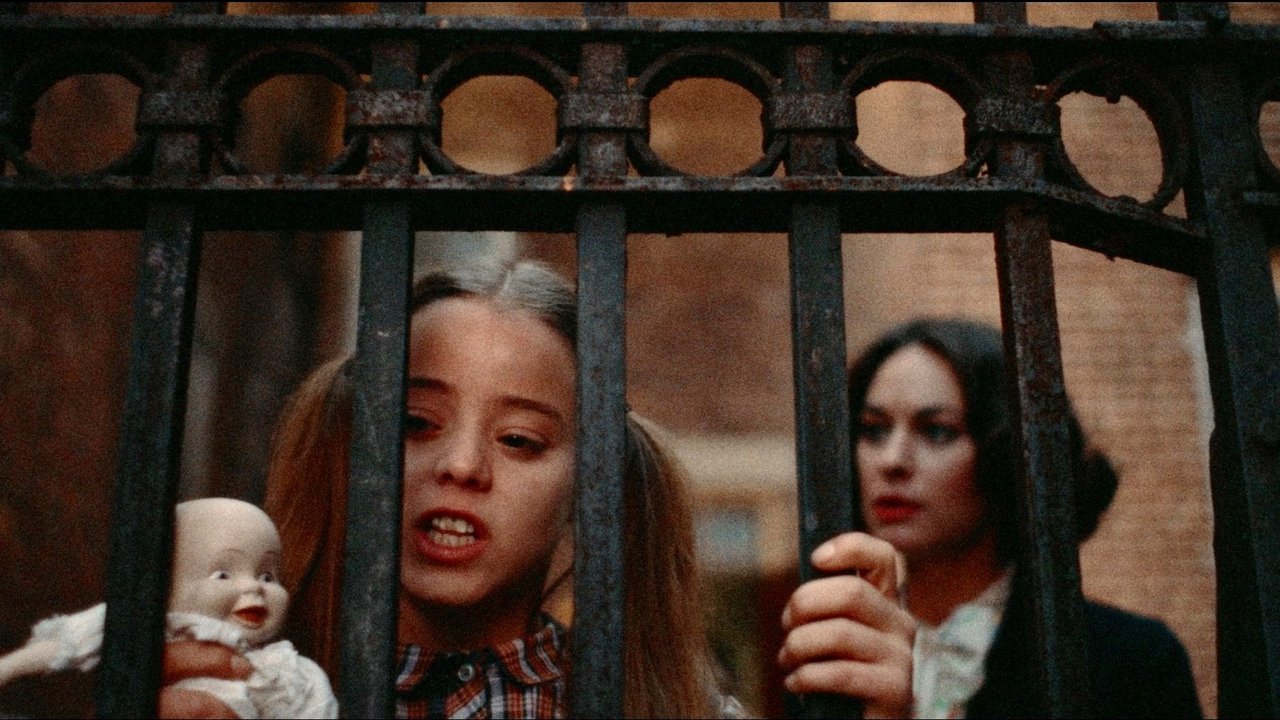
Alice, their younger daughter, is an easy target. She has a record of antisocial behaviour; people notice the Halloween mask, the stolen doll, the nastier little things children sometimes do. Spina’s suspicion lands on her, which fractures the family further.
Into that pressure cooker steps Catherine’s sister Annie, who moves in to help. She and Alice instantly dislike one another, and that domestic friction becomes another surface where grief can stick and fester.
The story keeps returning to the question of who to trust: a father who won’t let it go, a detective with doubts, and a household that’s starting to look like a crime scene in miniature. That premise — suspicion inside the family — is what makes the set-up work.
Why Catherine Spages matters
Catherine Spages is the film’s human centre: a divorced mother trying to hold a household together after a public tragedy. Linda Miller fills the role, but it’s Catherine’s position — between grief and responsibility — that matters here.
She moves through parish life, first‑communion routines and police interviews while the ordinary logistics of parenting keep insisting themselves on top of catastrophe. Those small, domestic demands make her decisions feel more urgent; she isn’t a melodramatic figure, she’s someone with rent, arguments and a child in an institution to think about.
Her sister Annie arrives to help, and the household tension that follows forces Catherine into constant choosing — whose version of events to believe, when to shield Alice and when to answer the police. That family friction gives the film its emotional leverage.
Even near the end, when Catherine goes to visit Father Tom and learns more devastating news, she remains the woman working through one impossible day after another. When she and the priest go to fetch Alice from the institution, it’s another instance of parental duty colliding with suspicion and grief.
Alice, Sweet Alice has more on its mind than the plot suggests
At surface level it’s a whodunnit wrapped in horror trappings. Under that, the film keeps returning to family: how blame circulates, how parents try to protect and how that protection can look like denial.
Loss is threaded through the action — Karen’s death is the event that exposes everything. The film treats grief as something corrosive that loosens ordinary bonds and makes neighbours and relatives suspicious of one another.
Parental protection is complicated here. Catherine’s decisions are about keeping a house and keeping a child safe, but those instincts are constantly at odds with the public, procedural world of detectives and autopsies. Mortality — and the authority structures around it, including the church — press on all of these themes. The presence of priests and the First Communion set the family’s private hurt against an institutional backdrop that offers comfort and judgement in equal measure.
Alice, Sweet Alice could not belong to any other decade
Alice, Sweet Alice was released in 1976, which matters because the film wears its era lightly but unmistakably: this is a mid‑70s American picture that runs in a tight 98‑minute shape and lets mood do a lot of the work.
That timing places the film among a stretch of movies comfortable with mixing domestic realism and raw unease. It doesn’t need flashy signifiers to declare its decade — instead, the period shows up in the way the story trusts atmosphere over explanation.
The result is a movie that feels like a 1976 product: modest in scale, interested in institutions (family, police, church) and willing to let moral messiness sit onscreen without smoothing it out.
Put simply: the film’s honesty about messy private life feels of its moment, and that anchoring helps the strange, horrific beats land more convincingly.
What has aged — and what hasn't
One of the things that survives is the film’s focus on family. The way suspicion splits a household, how relatives argue about what’s true and how parents try to shelter their children — those dynamics are still recognisable and uncomfortable.
Some specific beats remain quietly unnerving: for instance, small, ordinary invasions of privacy or kindness that turn sour. The moment when Catherine visits a clergyman’s home and is invited in by Mrs. Tredoni is an example of how casual familiarity becomes menacing in context.
The film’s compact runtime helps; it doesn’t overstay its welcome and the narrative pressure keeps the domestic tension taut rather than diffuse.
If anything feels dated, it’s not the core story but the ease with which suspicion is assigned and how institutions react; watched coldly, those responses can seem of their time. But the central family material keeps the movie alive for modern viewers.
Why Alice, Sweet Alice still matters
There are a handful of striking set pieces that people remember: the murder at First Communion, discovered by a nun, rearranges the ordinary into something horrific and impossible to ignore.
The film’s willingness to let a neighbourhood figure — Mrs. Tredoni — become the centre of a moral panic and a violent resolution gives it a specific, unsettling shape. Her belief that children are punished for their parents’ sins drives the narrative into a bleak, religiously inflected logic.
Key plot turns reinforce that legacy: Dominick’s abortive private investigation leads to a brutal confrontation, and later an autopsy detail — the crucifix turning up in a victim’s mouth — shifts suspicion away from Alice and underlines how entwined religious tokens and blame are in the movie. And the final public rupture, when Mrs. Tredoni attacks the priest during Mass and Alice places a bloodstained knife into her shopping bag, leaves a memorable, morally messy image — one that keeps the film lodged in the memory of people who saw it young and those discovering it later.
Does Alice, Sweet Alice still hold up?
Yes — if you’re after a compact, unsettling family thriller that leans into religious anxiety and neighbourly suspicion rather than spectacle. A 1976 picture directed by Alfred Sole and running 98 minutes, it keeps a tight focus on what grief does to ordinary life.
The film’s commitment to theme — family, loss and parental protection — gives it weight beyond the slasher or mystery labels. Catherine Spages is plausibly overwhelmed rather than melodramatic, and the film uses institutional settings (the church, the police) to amplify the emotional stakes.
Some viewers will find parts of the plotting blunt or the period reactions of the characters a product of their time. But the core proposition — that grief and guilt make a household combustible — still reads clearly on a modern screen.
Worth watching? Absolutely, for anyone curious about a small, morally complicated 70s horror that prefers quiet dread to cheap shocks. Stay with it to the end: the final scenes don’t tidy anything up, and that refusal to make comfort of catastrophe is exactly why the film lingers.