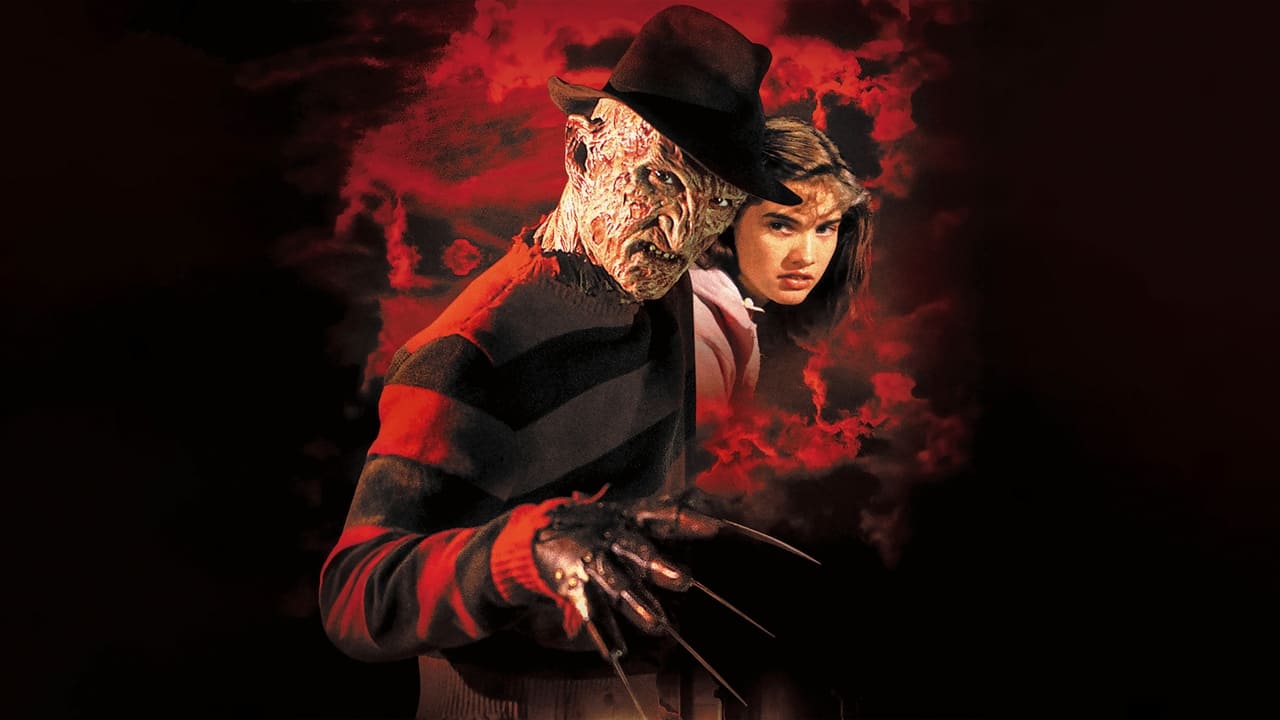

A Nightmare on Elm Street
“If Nancy doesn't wake up screaming, she won't wake up at all.”
Teenagers in a small town are dropping like flies, apparently in the grip of mass hysteria causing their suicides. A cop's daughter, Nancy Thompson, traces the cause to child molester Fred Krueger, who was burned alive by angry parents many years before. Krueger has now come back in the dreams of his killers' children, claiming their lives as his revenge. Nancy and her boyfriend, Glen, must devise a plan to lure the monster out of the realm of nightmares and into the real world...
About A Nightmare on Elm Street
What A Nightmare on Elm Street gets right
Start with the nightmare. The film opens by treating sleep as its own plausible threat — Tina Grey jolts awake from a violent dream in which a disfigured man with a bladed glove attacks her in a boiler room. It’s a simple, savage image, and the movie keeps returning to that collision between ordinary places and impossible violence.
Wes Craven directs with the sort of economy that matters in horror: there’s no bloat. A Nightmare on Elm Street runs for 91 minutes and uses that lean runtime to move between domestic scenes and genuinely unnerving dream set pieces without losing momentum. And at the centre is Nancy Thompson, played by Heather Langenkamp, who becomes the person most determined to turn those nightmares back on their head. Opposite her is a small, memorable ensemble — Robert Englund plays the disfigured man — and Craven keeps the focus tight on teenage fear and the adults who think they can fix it.
The idea that sets A Nightmare on Elm Street in motion
At its heart the film builds on a single, unnerving premise: something — someone — is attacking kids in their dreams, and those attacks leave real-world consequences.
That revelation tightens when Nancy’s mother explains the dark backstory: the attacker was a child murderer released on a technicality, and the neighbourhood's desperate reaction ended with him burned by residents who thought they were doing the right thing.
The film takes that vigilante act and refuses to let it be neat. The boundary between the past and the present blurs: at one point, a terrifying figure and Nancy’s mother seem to dissolve into a bed and then appear again as if the house itself is infected.
Which is why the resolution is telling — Nancy works out that the nightmare figure feeds on fear, and when she stops reacting to him he loses his power and evaporates. It’s a neat inversion: fear keeps him alive.
Why Nancy Thompson matters
Nancy Thompson is the kind of protagonist who insists on asking awkward questions. Heather Langenkamp plays her, and the script puts Nancy in the position of believing what everyone else either shrugs off or explains away.
She’s not just a victim; she’s a friend who shares nightmares with Glen Lantz and who watches the damage those dreams do to Tina. That shared experience — friends discovering they’ve dreamed of the same man — gives Nancy a reason to act beyond self-preservation.
The domestic threads matter here. Nancy’s relationship with her parents complicates the story: her father is a police officer who will try to do the procedural thing, while her mother ends up revealing disturbing family history and evidence — an item kept hidden in the house — that ties the threat to the neighbourhood itself.
By the end, Nancy is the one who takes the risk of pulling the nightmare into daylight, confronting both the literal threat and the consequences of what their parents did. She leaves the film in a place where she’s still young, but no longer passive about the danger around her.
A Nightmare on Elm Street has more on its mind than the plot suggests
On the surface it’s about a supernatural killer. Dig a little and the film is mostly interested in family and what happens when supposedly safe spaces stop feeling safe.
The house, the bedroom, even school are treated as fragile: domestic routines are interrupted by a menace no one can police in a conventional way. That tension — private life invaded by an external horror — is one of the film’s steady beats.
Friendship is another steady chord. The teenagers’ shared nightmares create an intimacy that’s different from adult intervention; they rely on each other in ways their parents often cannot or will not. And all of this comes back to fear. The movie explicitly links the antagonist’s power to the victims’ terror: when Nancy chooses not to feed that terror, the figure loses its hold. It’s a tidy, thematic payoff that keeps the emotional stakes tight.
A Nightmare on Elm Street could not belong to any other decade
Released in 1984, the film sits very much inside that era’s appetite for teen-centred horror. It’s a movie that assumes a teenage audience — their friendships, hangouts and shared anxieties — while still speaking to adults who think they can control danger with rules and arrest warrants.
There’s a certain 1980s economy to the storytelling: tight, direct, and unafraid to mix domestic melodrama with exploitative shocks. That balance of personal drama and genre frisson was a hallmark of a lot of horror from the period.
But it isn’t just style. The film’s concerns — parental responsibility, neighbourhood vigilantism, the gap between adults’ decisions and kids’ consequences — line up with other domestic anxieties present in cinema of the decade.
Put simply: it wears its date confidently. It’s a product of 1980s movie-making in the way it centres teenagers and packages moral panic as entertainment, rather than a film that pretends to be era-less.
What has aged — and what hasn't
Some elements remain crisply effective. The movie’s focus on teenagers — it’s very much a teen horror — still gives it a direct energy. The premise that something can strike in sleep keeps audiences invested because sleep is a universal vulnerability.
Certain nightmare sequences still land. Moments like the early boiler-room dream and the bathtub-threatening scene are written into the film’s sense of dread; they hinge on fear and suggestion rather than long technical showpieces, which helps them hold up.
The themes about family and home still read plainly: when a house stops being a refuge, the moral panic that follows feels immediate. That emotional throughline — parents’ actions reverberating in their children’s lives — translates across decades.
What’s most durable is the idea that fear is a resource. The story’s solution, where Nancy stops feeding the figure’s power and it dissolves, remains a satisfying emotional logic for modern viewers even if other aspects of the movie show their age.
Why A Nightmare on Elm Street still matters
The film leaves behind a handful of images and moments people tend to remember: a girl waking with unexplained wounds, the unsettling idea of a shared nightmare, and a fedora pulled from dream into the real world. Those threads stitch together into something that sticks in the mind.
Part of the movie’s lingering power is how it ties the supernatural threat to something painfully human: the adults’ decision to take vigilante justice into their own hands, burning a man who’d been accused of murdering children. That moral compromise haunts the teenagers long after the act.
There are also set-pieces that stayed in viewers’ heads: a teenager’s death framed as suicide, the desperate measures to stay awake, and the final gambit where Nancy draws the threat into daylight and briefly traps it. Those plot beats combine dread with a tangible plan — it’s not all doom and passive suffering. When people look back, they often return to the mix of domestic drama and nightmare logic. For those who grew up with it, that blend made bedtime something to worry about, and it’s the emotional residue of that worry the film keeps circulating.
Does A Nightmare on Elm Street still hold up?
Yes — but with a few caveats. If you’re after a tight, teenage horror with a single unnerving conceit, there’s still a lot to admire. Wes Craven’s direction keeps the pace brisk across a 91-minute runtime, and Heather Langenkamp’s Nancy is the kind of determined centre that the story needs.
Some elements feel rooted in their moment, yet the basic fear at the movie’s core is timeless: sleep is unavoidable, and the idea that something can reach you there is still effective. Scenes like the bathtub encounter and the early boiler-room nightmare retain their ability to unsettle because they rely on threat more than spectacle.
Where the film’s storytelling helps it survive is in its moral knot: parents who tried to solve a problem with violence, children left to face the consequences, and a protagonist who refuses to be passive. That combination keeps the stakes simple and emotionally readable.
So should you watch it? If you want a compact horror that treats home as fragile and makes you question ordinary safety, A Nightmare on Elm Street is worth a night. Just don’t go to bed afterwards.