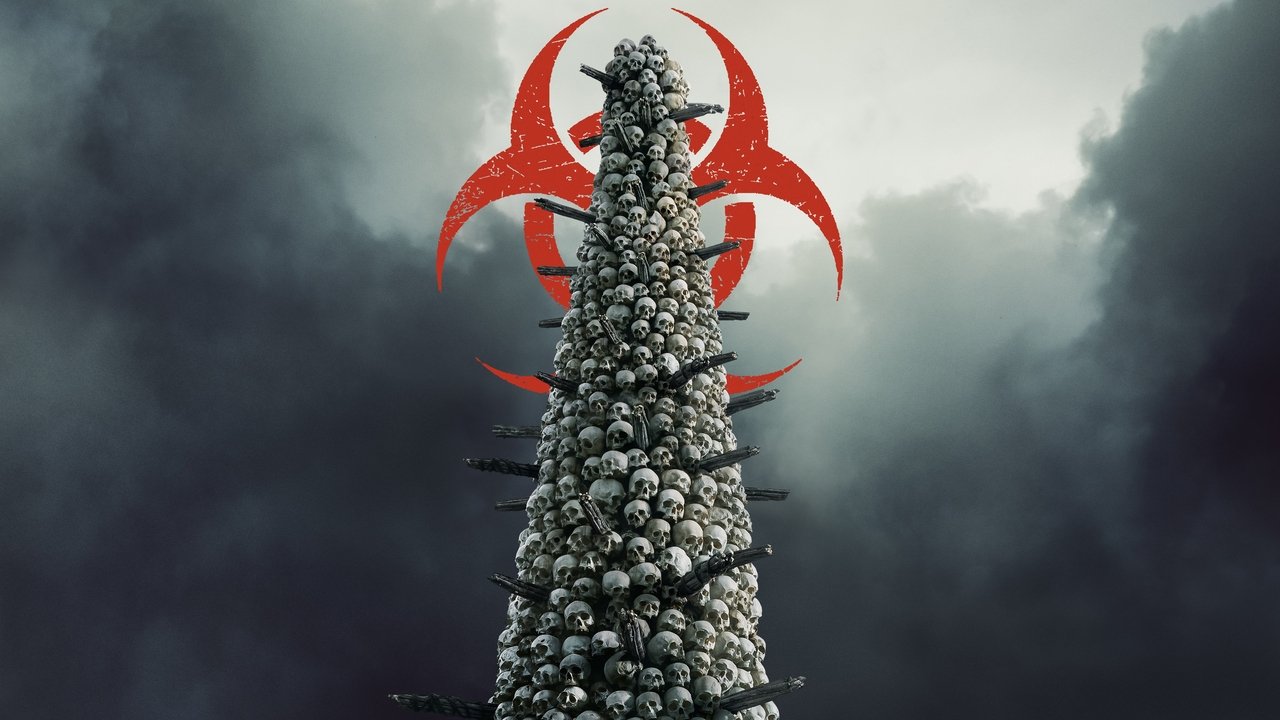

28 Years Later
“Time didn't heal anything.”
Twenty-eight years after the Rage virus outbreak, a heavily-defended island survives connected to the mainland by a single causeway. When one of the group leaves the island into the dark heart of the mainland, he discovers secrets, wonders, and horrors that have mutated not only the infected but other survivors as well.
About 28 Years Later
Why 28 Years Later still works
Start with a boy in a church. The movie opens by dropping us into the original outbreak through the eyes of young Jimmy Crystal: a child being shepherded to safety while the world outside collapses. That moment — small, almost devotional, and unsettling — tells you quickly what this film cares about: people trying to look after one another when the rules have been stripped away.
Fast-forward twenty-eight years and Danny Boyle has built a fragile economy of survival on a tidal island called Lindisfarne. It’s a community that feels lived-in: a scavenger husband, a sick wife and a twelve-year-old son whose coming-of-age test will force all of them to choose between duty and risk. That domestic knot keeps the headline horror beats honest. Boyle’s 115-minute thriller leans into genre work without losing sight of its characters. Jodie Comer’s Isla is the domestic centre here, Jamie (Aaron Taylor-Johnson) is the flawed partner, and young Spike is the kid who inherits the mess. Toss in a returned Jimmy — now an adult Sir Lord Jimmy Crystal — and you have a movie that remembers its bloodlines while it still finds time to scare you.
The idea that sets 28 Years Later in motion
At its simplest, the film rests on a tidy but effective premise: the Rage Virus has been stamped out in continental Europe, but the British Isles remain an uneasy quarantine with only pockets of civilisation left. That tension — safety in isolation versus the pull of the wider, dangerous world — runs through everything the film does.
The domestic thread is the engine. On Lindisfarne, a community has adapted to life behind tidal defences. Jamie, Isla and their son Spike are a tiny micro-society with its own rituals, rules and secrets. The question the film keeps asking is what those rules are worth when someone you love needs help.
Which is why Spike and Isla leaving the island feels like more than a plot point. Their trip to the mainland flips the film from island drama into a road of shrinking options: rescue, hostility and moral choice. One arresting sequence — where a panicked rescuer, Erik, threatens to kill a newborn found in the wreckage — crystallises how fragile mercy can be here.
The setup pays off because the film never treats quarantine solely as a backdrop; it makes the island’s safety and the mainland’s danger a real decision that characters must live with, and that friction is what gives the ensuing scenes their bite.
Why Isla, Jamie's wife who is battling a mysterious illness matters
Isla isn’t an ornament to the plot; she’s the reason the plot moves. The fact she’s living with undiagnosed cancer changes every choice Jamie makes, every risk the family takes, and it is the honest, painful centre of the film’s family drama.
Her illness is the kind of quiet catastrophe that can be treated as backstory but here becomes active pressure. Spike openly challenges his father for refusing to seek medical help and for being unfaithful — those arguments are the film’s moral sparks. They force the audience to ask who is protecting whom, and why people lie to themselves in order to keep peace.
Isla’s presence also contours the movie’s larger questions about care and community. When she and Spike head to the mainland, their journey isn’t just survivalist set-dressing; it’s an attempt to bring help back to a place that has learned to manage without professional medicine. That conflict between island self-sufficiency and the need for outside expertise surfaces again and again.
Finally, Isla’s story is what makes later decisions painful rather than merely plotty. People in this film are not anonymous survivors — they are someone’s partner, someone’s son. That personal tether is what stops 28 Years Later from being a catalogue of horrors and turns it into a story about what family actually asks of you.
28 Years Later has more on its mind than the plot suggests
At face value it’s a post-apocalyptic chase picture. Underneath, it’s mostly about how people bind themselves together — and sometimes pull apart — when the ordinary scaffolding of life vanishes. Family is the obvious lodestar here: parents, children, lovers who must negotiate messy loyalties under pressure.
Freedom in this film is complicated. The island’s isolation is freedom from the immediate contagion, but it’s also a kind of imprisonment: choices are narrowed, and personal mistakes are amplified. Leaving that safety exposes characters to moral dilemmas that test who they actually are.
Home and safety are repeatedly shown as fragile and relative. The causeway that connects Lindisfarne is a literal and symbolic boundary: when it floods, you’re cut off. That geography keeps returning as a reminder that safety is conditional, not permanent. Friendship and fear share the same space throughout. A seemingly friendly suggestion — like Sam pointing at Kelson as the possible arsonist — can flip the film’s compass. Small human relationships decide survival as much as big action sequences do.
28 Years Later could not belong to any other decade
Being a 2025 film matters because the movie is making a conversation with its present rather than nostalgically referencing earlier horror fashions. Its concerns about quarantine, restricted borders and what people will do to protect their own feel pitched at audiences who remember the 2020s’ anxieties.
This is not retro pastiche. Boyle released 28 Years Later in 2025 and it wears that release-date like a timestamp: it’s a picture that sits in the era’s cultural weather rather than behind it.
As a 2020s movie, it treats survival as social and domestic labour rather than only spectacle. The film’s ideas about community, caretaking and containment reflect questions the decade kept asking aloud.
That doesn’t mean it’s a manifesto. It’s simply a film of its moment: recognisably of the 2020s because it stitches political and personal fear into the same fabric.
What has aged — and what hasn't
The parts that age well are the human ones. The family dynamics — a son calling his father out, a husband making terrible compromises to keep a household together — feel immediate. Those emotional choices don’t date the way fashion or effects sometimes do.
Kelson’s Bone Temple remains a striking piece of the film’s imagination. The idea of an ossuary made from both survivors and the Infected, and the ritual language of memento mori, gives the movie a weight that survives repeat viewings: it turns death into a story you can talk to, rather than just an end you suffer.
Practical moral dilemmas — whether to trust outsiders, whether to risk the causeway for help, how to honour the dead — still land. Kelson urging Spike to take the infant home, and Spike’s subsequent choices, read as the sort of human knot that feels recognisable now as it did on first release.
If anything feels more dated, it’s not the themes but the way the film sometimes treats community myths and guilt as tidy catalysts for action. But even there, the moments remain watchable because they feed directly into the characters’ interpersonal stakes.
Why 28 Years Later still matters
People who remember this film don’t cite a single sequence so much as a handful of tonal pivots that stick in the mind: the original child fleeing his burning home; the tidal island’s brittle rituals; the sudden shift to the grim moral calculus on the mainland. Those beats are distinct and stubbornly memorable.
There are set-pieces that lodge in the memory — Spike’s first kill, the Alpha hunt across the causeway, the village’s ballista defence — but the film’s real afterlife comes from how these set-pieces sit next to quieter moments. A party celebrating a rite of passage sits beside a boy leaving a note promising to come back; that contrast is part of what people keep returning to.
Kelson’s Bone Temple, and the language of memento amoris, gives the movie a vocabulary people quote to themselves when they talk about it. It’s rare in this kind of film to find a moment that aims for ritual and reflection, and that gives 28 Years Later a distinct personality. Finally, the return of Jimmy — now leading a violent, garish cult — ties the opening and the closing together. That looping of childhood trauma into adulthood’s horrors is the sort of structural echo that makes the film stickier than a run-of-the-mill zombie chase.
Does 28 Years Later still hold up?
Yes — with a rider. If you care about human stakes as much as jolts, you’ll find a lot to like. Boyle’s 115-minute film is a thriller that insists on being a family story at the same time: the core conflict about Isla’s health, Jamie’s choices and Spike’s moral education gives the film purpose beyond scares.
It’s a movie that rewards attention to character decisions. Spike confronting Jamie over medical neglect and infidelity, the decision to cross the causeway, Kelson’s rituals with the Bone Temple — these are not decorative; they drive the emotional logic. That makes the film feel honest rather than merely effective.
If you watch it purely for shocks, you’ll still get set-pieces — hunt sequences, the Alpha, the grotesque echoes of the original outbreak — but they land better because they are anchored by the smaller human costs. The film’s themes of family, home and freedom are stitched into the action rather than tacked on.
So should you watch it now? Absolutely, if you want a post-apocalyptic picture that remembers why people risk themselves for one another. It doesn’t offer easy consolations, and it ends on notes that feel earned rather than neat. In short: bring your nerves, but bring your heart too — memento amoris, remember you must love, is the right last line to walk away with.