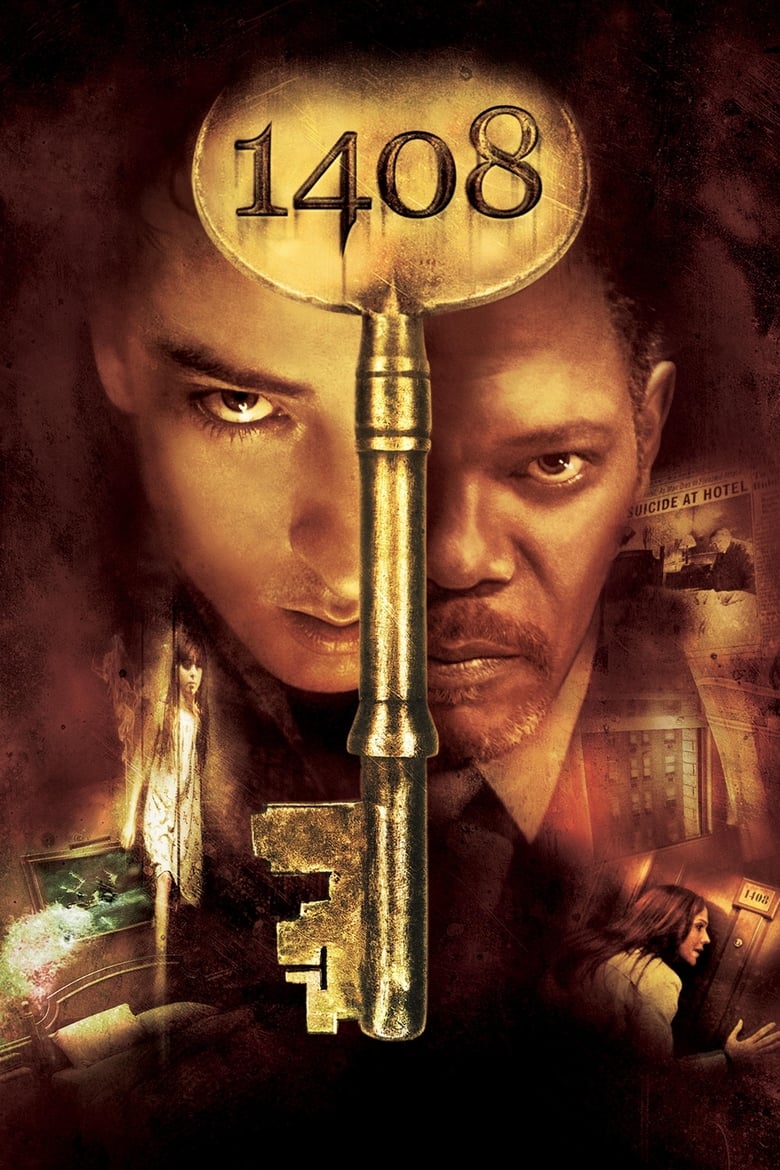
1408
“The Dolphin Hotel invites you to stay in any of its stunning rooms. Except one.”
A man who specializes in debunking paranormal occurrences checks into the fabled room 1408 at the Dolphin Hotel. Soon after settling in, he confronts genuine terror.
About 1408
Why 1408 still works
There’s an unmistakable pleasure in watching someone who insists nothing scares them discover that they were wrong. Mike Enslin is that man: a cynical author who writes about the supernatural without ever believing it, and the whole film is built around the comedy—and then the horror—of that mismatch.
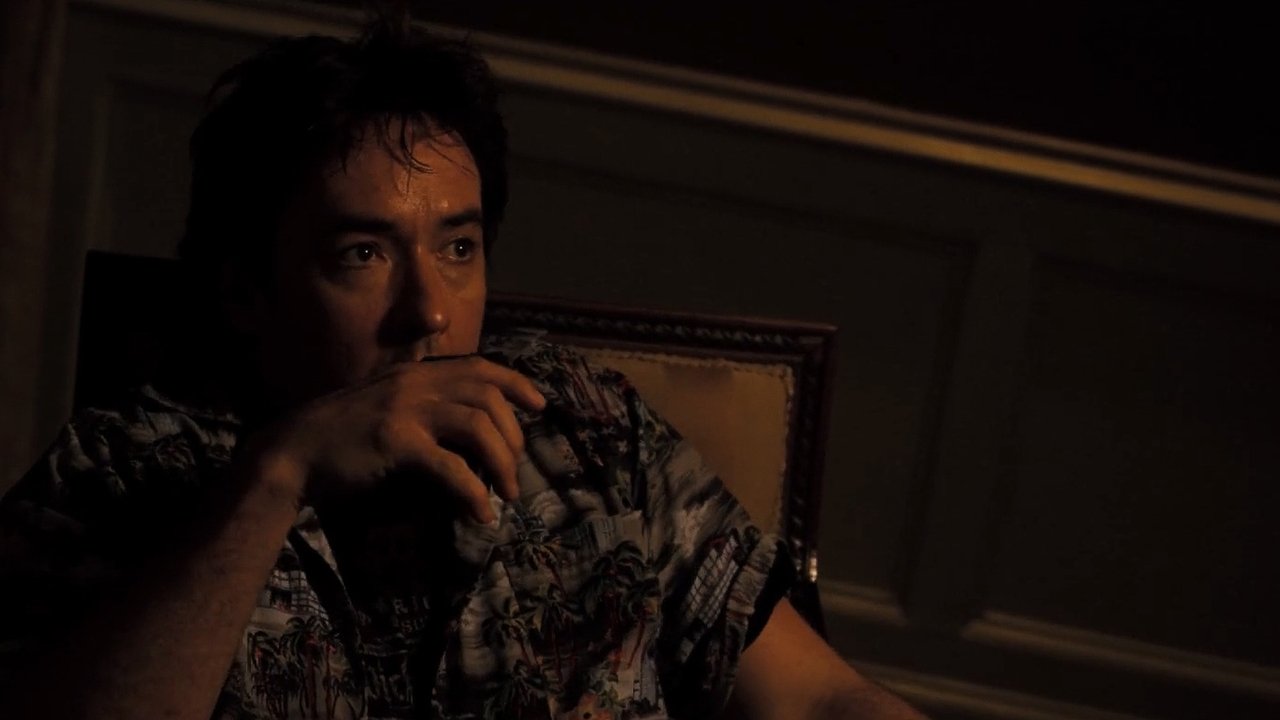
Mikael Håfström keeps the shape tight. 1408 is short and sharp at 106 minutes, and it knows exactly where to spend its time: on the slow unravelling of a premise rather than on catalogue of horrors. The setup is deliciously simple—a mysterious postcard prompts the sceptic to seek out a particular room—and it gives the film somewhere blunt and moral to aim at. John Cusack’s Mike walks into the Dolphin with a challenge in his head and a recorder in his hand. What follows—an escalating countdown and a room that refuses to let him go—turns a tidy ghost story into a study of someone being forced to reckon with everything he’s tried to dismiss.
Why Mike Enslin matters
Mike Enslin isn’t written as a blank-slate hero. He’s specific: a writer who makes a living cataloguing hauntings and who, crucially, refuses to accept them as real. That stubborn disbelief frames every choice he makes in the film and turns the horror into something personal rather than incidental.
Because he’s an intellectual decoy—someone who files ghosts under the heading of fraud—each supernatural event lands as more than spectacle. The film keeps bringing up people and moments he has ignored, forcing his private history into the same room as the things he once dismissed.
Those flashbacks and visions reach into the most intimate corners of his life: memories of his daughter and his ailing father. They don’t exist merely to frighten; they raise the stakes. The ghosts are not random; they are the parts of Mike he won’t admit to grieving.
That combination—a man who writes about the supernatural for a living, and the personal losses he’s tried to shelve—gives the film a tidy emotional lever. Breaking Mike is not just about proving the room exists. It’s about making him feel what he has denied.
1408 has more on its mind than the plot suggests
On the surface, 1408 is a ghost story. Beneath that surface it keeps nudging at whether belief matters. The film enjoys putting a professional sceptic in a position where refusing to believe stops being a safe stance and becomes a coping strategy that must be dismantled.
Fear in 1408 is intimate, not cosmic. It’s the kind that arrives by replaying private memories until they are unbearable, rather than an external monster banging on the door. That inward pressure is what makes the terror credible: the room weaponises Mike’s own past against him.
Freedom is treated as a tricky currency. The film sets up choices—escape, repetition, even a kind of bargain—and continually asks what it means to be free when your options are shaped by a place that refuses to release you. The moral of the horror is less ‘there is something out there’ and more ‘what will you do when the thing you refuse returns?’
Memory is the engine. 1408 doesn’t just show ghosts; it makes memory behave like an active antagonist, replaying private failures and losses until the protagonist must confront them. That gives the film a resonance beyond the immediate scares: it’s about how old pain can be made suddenly, horribly present.
1408 could not belong to any other decade
Arriving in 2007, 1408 sits neatly in the 2000s’ appetite for psychological frights that treat fear as a private, almost domestic affair. It’s not trying to reboot a franchise or out-scare an audience with set-pieces; it’s content to tighten and tighten the screws.
That decade liked its horror compact and idea-driven, and 1408 reflects that. There’s a confidence in making the audience spend most of the runtime inside one room, with a single central conceit sustaining the tension.
It also fits with a 00s tendency to adapt material that blurs genre lines—this film is horror, yes, but it’s also a drama about grief and a thriller about choice. That mix feels of its moment: filmmakers then were willing to let genre breathe into character. Put simply: 1408 is of the 00s because it trusts a neat premise carried by character and mood rather than spectacle alone. It’s polite, economical terror—an era’s taste in miniature.
Why 1408 still matters
People remember 1408 because it made a neat spiritual bet and then put every cent on the table. A postcard dares the sceptic; a hotel manager begs him not to go; and the film converts that simple dare into a string of set-pieces that always serve the character rather than the other way around.
The movie gives the supernatural rules that feel punitive and precise: the room has a history—decades of guests who couldn’t last an hour—and then it proceeds to test Mike with a countdown and a parade of visions that drag up his dead daughter and his sick father. Those personal intrusions stop the film from feeling like a collection of scares and make it feel like a reckoning.
There are moments the audience remembers because they wedge themselves under the skull: a false escape that turns into an endless loop, a video-window mirror asking for help, and the cruel choice the hotel offers about repeating the hour or taking an irreversible exit. It’s the moral sharpness of those options that gives the film its bite.
And it finishes with a neat, cruel confirmation: after everything, a tiny piece of evidence returns to underline that Mike’s experience wasn’t simply imagined. That last sound—an impossible voice emerging from a rescued tape—pulls the rug as neatly as the rest of the film had tugged at Mike’s life.
Does 1408 still hold up?
Yes—if you like your horror compact, idea-driven and anchored in character. 1408’s setup is simple: a sceptic goes looking for trouble and finds a room that will not let him leave. That clarity is its strength; there’s little fat and every scary beat exists to push Mike toward an unavoidable confrontation.
The film’s choices—how it weaponises memory, how it stages the countdown and how it forces a character who profits from disbelief to feel—still land. It’s directed with a steady hand and doesn’t try to be more than a tight psychological haunted-house parable, which is exactly what it needs to be.
Practicalities: at 106 minutes it’s a neat evening watch, and the central conflict between Mike and the hotel manager’s warnings keeps the moral stakes readable. If you enjoy horror that gives you one clever idea and then refines it until it hurts, this is the sort of movie that rewards that patience.
If you want gargantuan effects or franchise baggage, look elsewhere. But if you want a haunted room that feels like an argument with a man who refuses to grieve, 1408 still does its job. It doesn’t scream louder than newer horrors; it simply keeps whispering in a way that still gets under the skin.