Zombies Weren't Always the Walking Dead
The word zombie existed in cinema long before hordes of corpses began eating people.
Early American zombie films drew upon highly distorted Hollywood interpretations of Haitian beliefs and Vodou, often presenting zombies as living people robbed of their will and controlled by somebody else.
White Zombie arrived in 1932 with Bela Lugosi and is widely considered the first feature-length zombie film.
But these creatures weren't the flesh-eating dead we recognise today.
That transformation required George A. Romero.
And strangely enough, Romero's landmark film didn't spend much time calling its creatures zombies at all.
Night of the Living Dead Reinvented the Monster
In 1968, seven people barricaded themselves inside a Pennsylvania farmhouse.
Outside were the dead.
George A. Romero's Night of the Living Dead fundamentally changed horror.
The creatures weren't controlled by a sorcerer.
They weren't servants.
They were corpses that had inexplicably returned to life — and they wanted to eat the living.
Romero established much of the vocabulary zombie cinema would spend decades expanding.
The dead move relentlessly.
Civilisation begins collapsing.
A bite means disaster.
The survivors become trapped together.
And increasingly, the people inside the supposed safe place can be almost as dangerous as the creatures outside.
That final element became crucial.
Romero wasn't merely interested in monsters.
He was interested in people surrounded by monsters.
The film's ending ensured the nightmare couldn't be dismissed as simple creature entertainment either. Ben survives the night only to be shot by an armed posse that mistakes him for one of the dead.
There is no triumphant escape.
No restoration of order.
Just bodies being dragged towards a fire.
The modern zombie had arrived.
And it was already about much more than zombies.
Dawn of the Dead Turned the Apocalypse Into Satire
Ten years later, Romero went bigger.
Dawn of the Dead moved the nightmare into a shopping mall.
It was perfect.
The survivors discover what initially looks like an apocalypse-proof paradise. Food. Clothes. Weapons. Beds. Entertainment.
Everything consumer society could possibly offer.
Unfortunately, the dead keep arriving.
Why?
As one character suggests, the mall was important to them when they were alive.
They remember it.
That single idea helped transform Dawn of the Dead into one of horror's great pieces of social satire.
The zombies wander through shops because that's what people did before they died.
The survivors gradually surround themselves with possessions while the world outside collapses.
The mall provides everything.
Except a future.
Romero had discovered the zombie's greatest strength.
It could mean almost anything.
Consumerism.
Racism.
Militarism.
Class.
Conformity.
Disease.
Fear of strangers.
Fear of ourselves.
The monster was almost blank.
Every generation could write its own anxiety onto it.
Italy Made Zombies Nastier
Romero's films didn't remain an American phenomenon.
Italian filmmakers enthusiastically embraced the dead.
Lucio Fulci's Zombie — released as Zombi 2 in Italy to capitalise on the Italian title of Dawn of the Dead — took the genre somewhere considerably more gruesome.
The emphasis shifted.
Decomposition became part of the attraction.
These weren’t merely pale people walking slowly.
They looked dead.
Rotting flesh, worms, damaged faces and increasingly elaborate gore became central to the Italian cycle.
Fulci also delivered one of zombie cinema’s most infamous images: a wooden splinter moving slowly towards an eye.
Italian zombie movies frequently operated with fewer restraints and increasingly bizarre combinations of exploitation, adventure and gore.
Not all of them were good.
Some barely made sense.
But they pushed the physical possibilities of zombie horror much further.
The dead weren’t just walking anymore.
They were decomposing in front of us.
Return of the Living Dead Let Zombies Have Fun
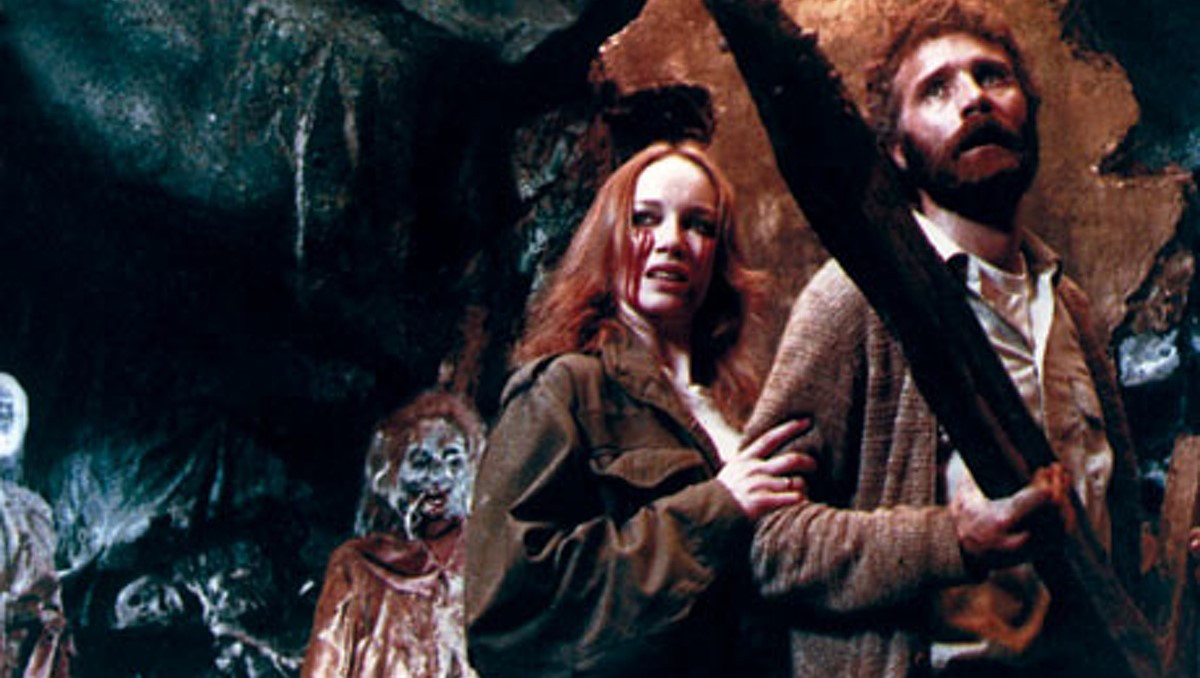
Then somebody taught them to talk.
Dan O'Bannon's The Return of the Living Dead arrived in 1985 and gleefully tore up the rules.
These zombies could move quickly.
They could think.
They could speak.
And most importantly:
They wanted brains.
The film combined punk culture, black comedy and gruesome horror into something completely different from Romero's work.
Its zombies were also considerably harder to kill.
Destroying the brain wasn't enough.
Even dismembered body parts continued moving.
Burning a corpse could make things worse by spreading contaminated material into the atmosphere.
Every sensible solution created another problem.
And the movie gave popular culture something incredibly durable.
Ask somebody what zombies eat, and there's a good chance they'll answer:
Brains.
That idea wasn't a defining feature of Romero's zombies.
Return of the Living Dead helped make it one.
Then the Zombies Almost Disappeared
By the 1990s, zombies no longer led mainstream horror.
Slashers had already experienced their own boom and decline. Psychological horror, supernatural thrillers and increasingly self-aware movies occupied more attention.
Zombie films continued to exist.
Peter Jackson's Braindead pushed splatter comedy to absurd extremes.
Michele Soavi's Cemetery Man offered something stranger and more philosophical.
Romero's Night of the Living Dead received a 1990 remake directed by effects legend Tom Savini.
But the zombie didn't dominate horror culture.
For a while, it looked like the monster might finally have run its course.
Then came 2002.
28 Days Later Made the Apocalypse Fast
Jim wakes in a hospital.
London is empty.
That image alone was enough to announce that something had changed.
Danny Boyle's 28 Days Later introduced audiences to a Britain devastated by the Rage virus.
Its infected weren't technically Romero-style reanimated corpses.
They were living human beings transformed by infection.
But the film unmistakably drew upon the language of zombie cinema while dramatically changing its rhythm.
These things ran.
Fast.
The slow-moving horde had always been frightening because it felt inevitable.
You could outrun one zombie.
You couldn't necessarily outrun a thousand.
28 Days Later created a different fear.
Now you might not even outrun one.
The deserted London imagery also gave the modern zombie apocalypse a new scale.
This wasn't a farmhouse.
It wasn't a mall.
Civilisation had already lost.
The 2000s Brought Zombies Back Everywhere
Once the dead returned, they were suddenly difficult to avoid.
The Resident Evil films brought video-game-inspired zombie action to cinemas.
Zack Snyder's 2004 Dawn of the Dead remake opened with suburban civilisation collapsing almost instantaneously — and its zombies could run.
Then Edgar Wright and Simon Pegg approached the apocalypse from a completely different direction.
Shaun of the Dead asked what would happen if the end of the world arrived while you were stuck in a dead-end job, struggling with your relationship and planning another night at the pub.
The answer was one of horror comedy's defining films.
And crucially, the comedy worked because Wright clearly loved the movies being referenced.
The zombies weren't treated as a joke.
The characters were.
The decade kept going.
[REC] trapped the infection inside a Barcelona apartment building and used found-footage filmmaking to make the audience feel trapped with it.
Planet Terror embraced exploitation excess.
Zombieland transformed survival into a set of rules.
The zombie wasn't merely back.
It had become flexible enough to fit almost any kind of movie.
Train to Busan Proved There Were Still Places to Run
By 2016, audiences had watched a lot of zombies.
Then Train to Busan put them on a train.
Sometimes that's all reinvention requires.
A familiar monster.
A brilliant new environment.
Yeon Sang-ho's film traps passengers aboard a high-speed train while an outbreak spreads across South Korea.
The confined setting creates a different kind of zombie problem.
You can't simply drive away.
Every carriage becomes territory.
Every door becomes a defensive line.
Moving forward means entering whatever is waiting in the next compartment.
But the film works because the zombies aren't really its emotional centre.
The relationship between Seok-woo and his daughter Su-an is.
Like Romero before him, Yeon understood the essential secret of zombie cinema:
The monsters create the situation.
The humans make us care about it.
The Walking Dead Changed the Scale
A zombie movie traditionally asks one question:
Can these people survive the next couple of hours?
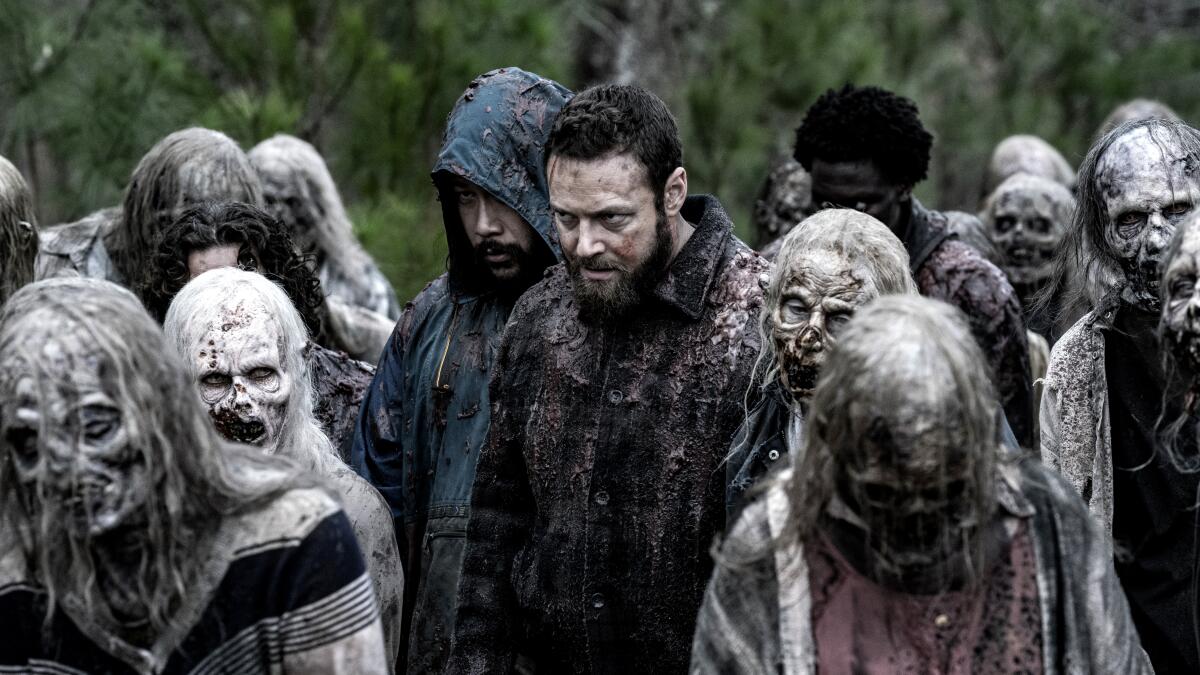
The Walking Dead asked what happens if they survive for years.
The television adaptation of Robert Kirkman's comic transformed the zombie apocalypse into long-form drama.
Communities formed.
Communities collapsed.
Children grew up knowing nothing else.
New villains appeared.
Characters audiences had followed for years died.
The walkers remained an ever-present threat, but eventually the title's meaning became deliberately ambiguous.
Who are the walking dead?
The corpses?
Or the survivors gradually losing pieces of themselves?
Zombie stories had always been about humanity under pressure.
Television simply gave that pressure much longer to work.
You Don't Need to Explain the Monster Anymore
One reason zombie movies remain extraordinarily adaptable is that audiences already understand them.
A filmmaker doesn't need twenty minutes to explain the concept.
Dead people are walking around.
Don't get bitten.
That's enough.
From there, the movie can become almost anything.
A siege film.
A comedy.
A romance.
A family drama.
A war movie.
A political satire.
A found-footage nightmare.
A survival adventure.
Put zombies on a train, and you have Train to Busan.
Put them in a pub, and you have Shaun of the Dead.
Put them inside an apartment building, and you have [REC].
Put them in a shopping mall, and you have Dawn of the Dead.
The monster stays recognisable.
The world around it changes.
Every Generation Gets the Zombie It Needs
Vampires usually require mythology.
Werewolves require transformation.
Ghosts require the past.
Zombies require something much simpler.
Us.
That's what makes them endlessly useful.
A zombie is a human being with the humanity removed.
A neighbour.
A friend.
A parent.
A stranger.
Someone we love.
Someone we were.
They're also rarely the true ending of the world.
They're the beginning of a story about what happens after the world ends.
Who gets food?
Who controls the shelter?
Who gets left outside?
Who do you trust?
How much of civilisation do you preserve when civilisation itself has disappeared?
Those questions don't age particularly quickly.
Which means neither does the zombie.
You Can't Kill Something That's Already Dead
Zombie cinema has supposedly exhausted itself more than once.
Too many sequels.
Too many television shows.
Too many games.
Too many outbreaks.
Too many abandoned hospitals.
Too many people waking up and discovering the world ended while they were unconscious.
Then somebody finds another angle.
Romero changed what a zombie was.
Dawn of the Dead showed what it could represent.
Italian horror showed how disgusting it could become.
Return of the Living Dead made it funny.
28 Days Later made it fast.
Shaun of the Dead took it to the pub.
[REC] trapped us beside it.
Train to Busan put nowhere to run on rails.
Every reinvention leaves something behind for the next filmmaker to pick up.
And that might be why the zombie has survived longer than almost anyone expected.
The creature itself isn't particularly complicated.
We are.
As long as society gives horror filmmakers something to be angry about, frightened of, or suspicious of, there will always be another reason for the dead to rise.
So sooner or later, somebody will open another door.
Something will be standing on the other side.
And despite everything horror has taught us...
some idiot will probably get bitten.